Why It Happens Here
Warm attic, cold eave, weeks of freeze-thaw.
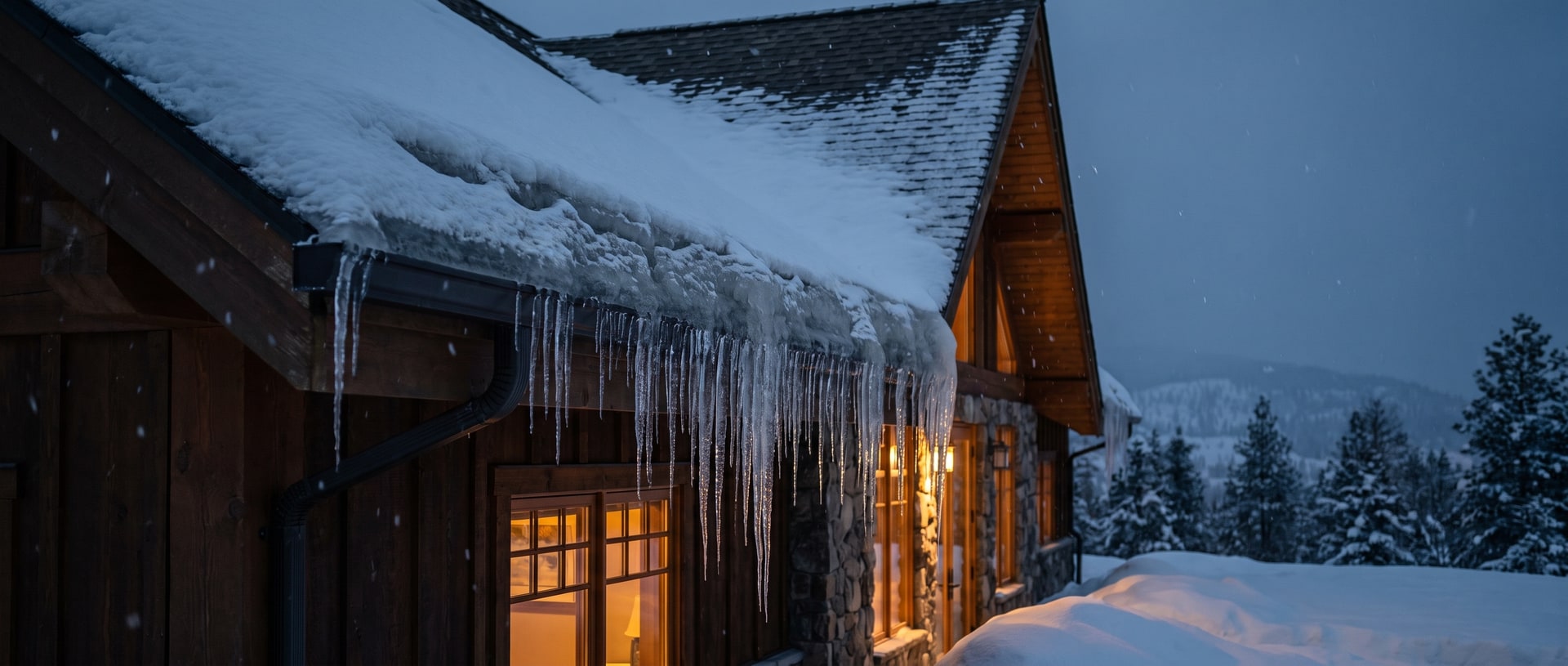
An ice dam needs three things: snow on the roof, heat escaping from below to melt it, and an eave cold enough to refreeze the melt. The Okanagan supplies all three for weeks at a stretch. A sunny day at minus three melts the upper roof from underneath and from above, the water runs down to the overhang, which has no house under it to keep it warm, and it freezes into a ridge. The next day’s melt has nowhere to go but behind the ridge and up under the shingles.
The heat is the part that varies house to house. Thin or gappy attic insulation, blocked soffit vents, a bathroom fan or pot lights dumping warm air into the attic, and no air path from soffit to ridge all keep the roof deck warm enough to melt snow when the air is well below freezing. Complicated roofs with valleys, dormers and low-slope sections that hold snow make it worse.
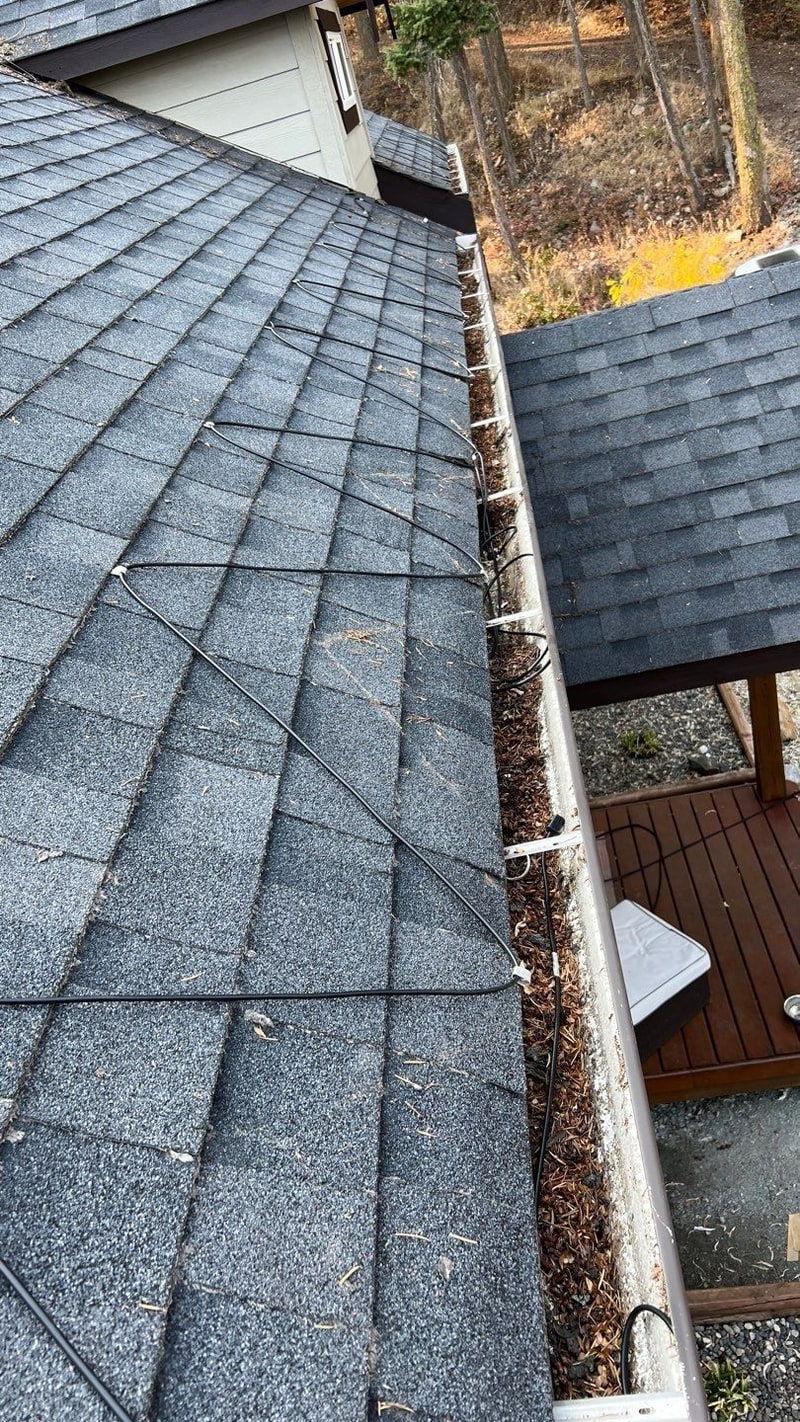
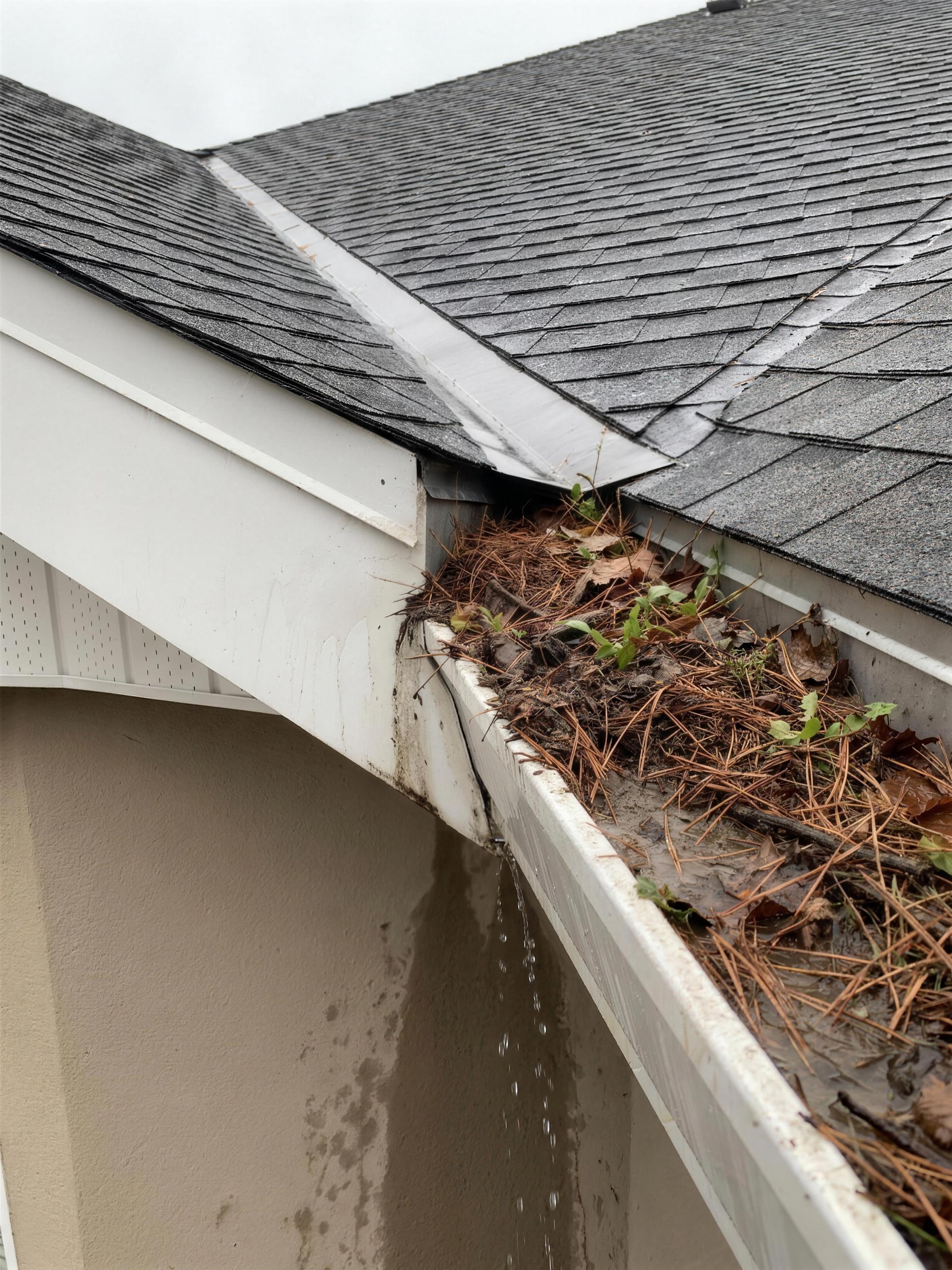
Where the geometry means dams will form no matter what, the mitigation is heat trace: self-regulating cable run in a serpentine along the eave and down through the gutters and downspouts so a melt channel always stays open. The photograph is one of Premium Roofing’s own installs, cable in the gutter and up the field of the roof. For the full story on dams and heat trace, see Premium’s ice damming and heat trace pages.