Home Repairs Roof Leak Repair Emergency & Storm Response Shingle Repair Flat & Commercial Roof Repair Flashing, Chimney & Vent Repair Ice Dam & Winter Damage Storm Damage & Insurance Claims Skylight Leak Repair Roof Maintenance Programs More The Cost of Waiting Repair vs Replace FAQ Contact & Service Area Call 250-258-8600
  1. Kelowna Roofing Repairs
  2. Storm & Wind Damage Repair

Storm & Wind DamageRepair & Insurance Claims

Wind off the lake, hail in June, a pine limb in a February storm. We document the damage from the roof, make it safe the same visit, repair it properly, and give you the written report and flat-rate quote your adjuster needs. We work for you, not the insurer.

Call 250-258-8600

Leaking right now? Call and say so. Emergency calls are answered 8 am–5 pm weekdays, weekends by arrangement for a fee. An active leak gets a temporary measure first, then a proper repair once the roof is dry enough to do it right.

Call 250-258-8600

After the storm, from the ground and up.

Some storm damage is obvious from the driveway. The expensive kind usually is not. If the weather was bad enough to make you look, it was bad enough to be worth a look from the roof.

Shingles on the lawn

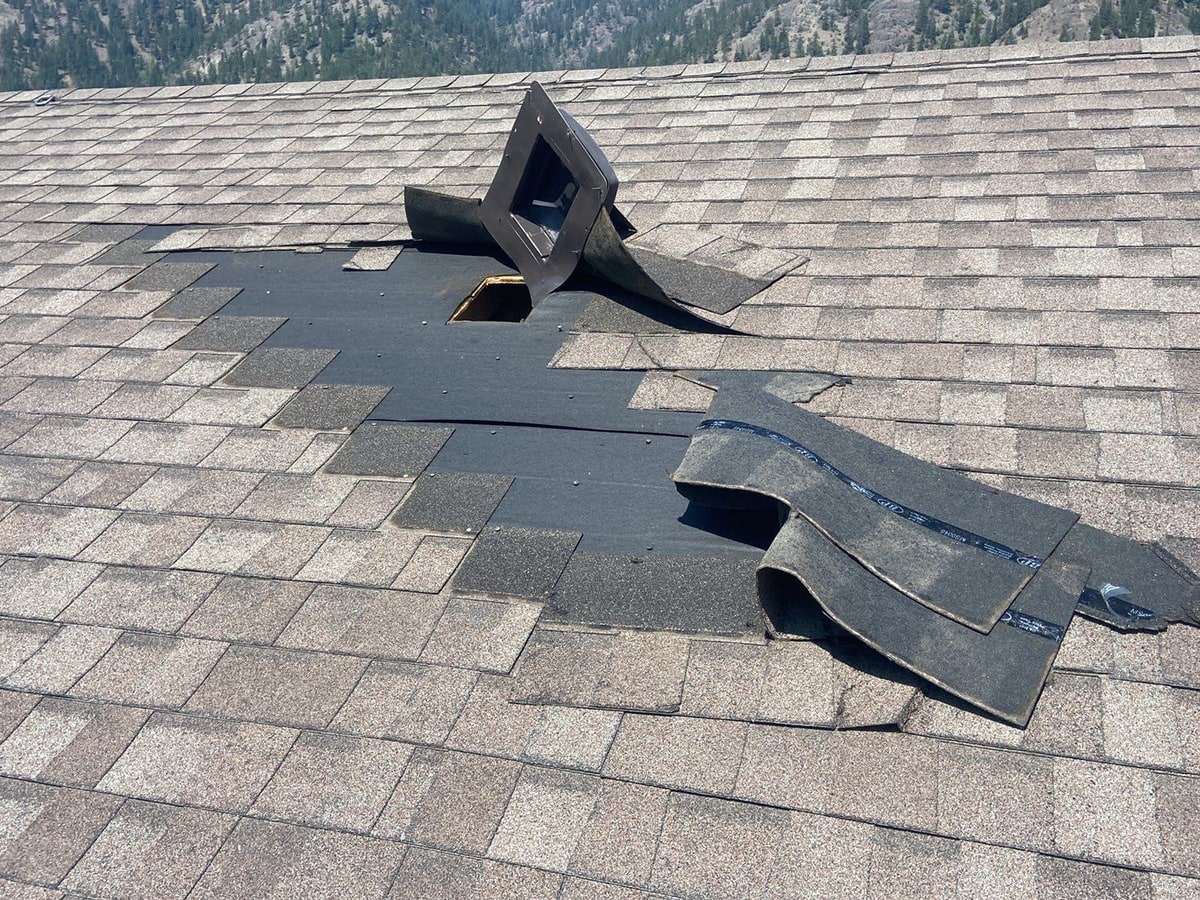
Whole tabs or strips on the ground, or a bare patch on the roof showing underlayment or plywood. The obvious one, and the one that lets rain straight in.

Lifted or creased shingles

Courses that got picked up by the wind and dropped back. They look fine from the street, but the crease is a break in the mat and the seal strip is gone. They come off next time.

A vent, cap or ridge gone

Wind gets under a plastic vent or a ridge cap first. A missing vent is a hole the size of a dinner plate, straight into the attic.

Dents in the metal, bruises in the shingle

Hail leaves dents in vents, gutters and flashings you can see, and soft bruised spots in the shingle with the granules knocked off that you cannot. Bruises are where the roof fails in two years.

Granules piled in the gutter or at the downspout

A storm scours granules off aged shingles. A pile of them after a hailstorm is a sign the surface took a beating, and the UV protection went with it.

Edge metal or gutter torn loose

Drip edge or fascia metal peeled back at a corner, gutter sections hanging. Wind loads the edge of the roof hardest, and once the edge is open the field goes next.

A branch on the roof, or a hole where one hit

Pine and cottonwood limbs punch through shingles and sometimes the deck. Even a limb that has been cleared can leave a cracked sheet of plywood under shingles that look whole.

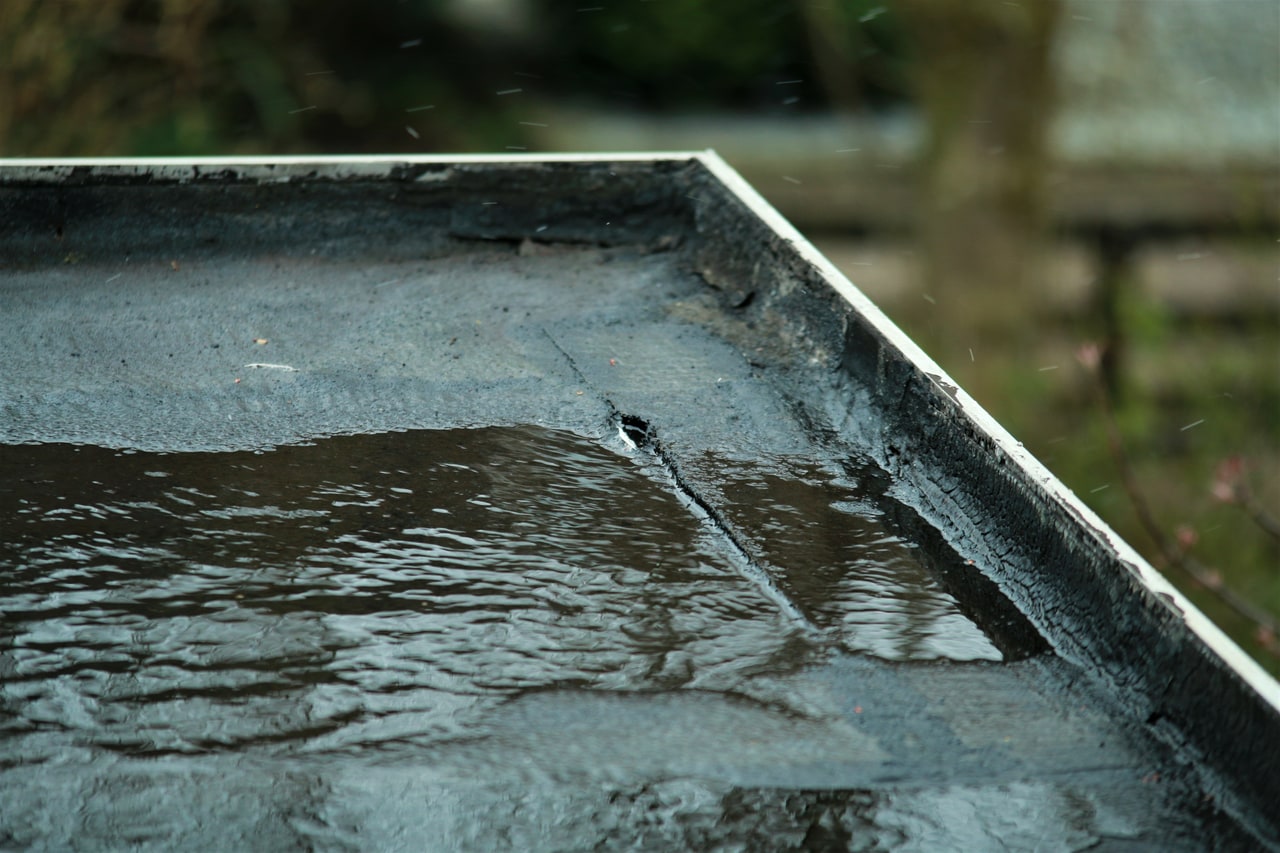
Membrane edges lifted on a flat roof

On commercial and flat roofs, wind gets under the perimeter first: peeled edge metal, a lifted corner of membrane, a rooftop unit shifted on its curb. See flat roof repair.

Worse from up here than it looks from down there.

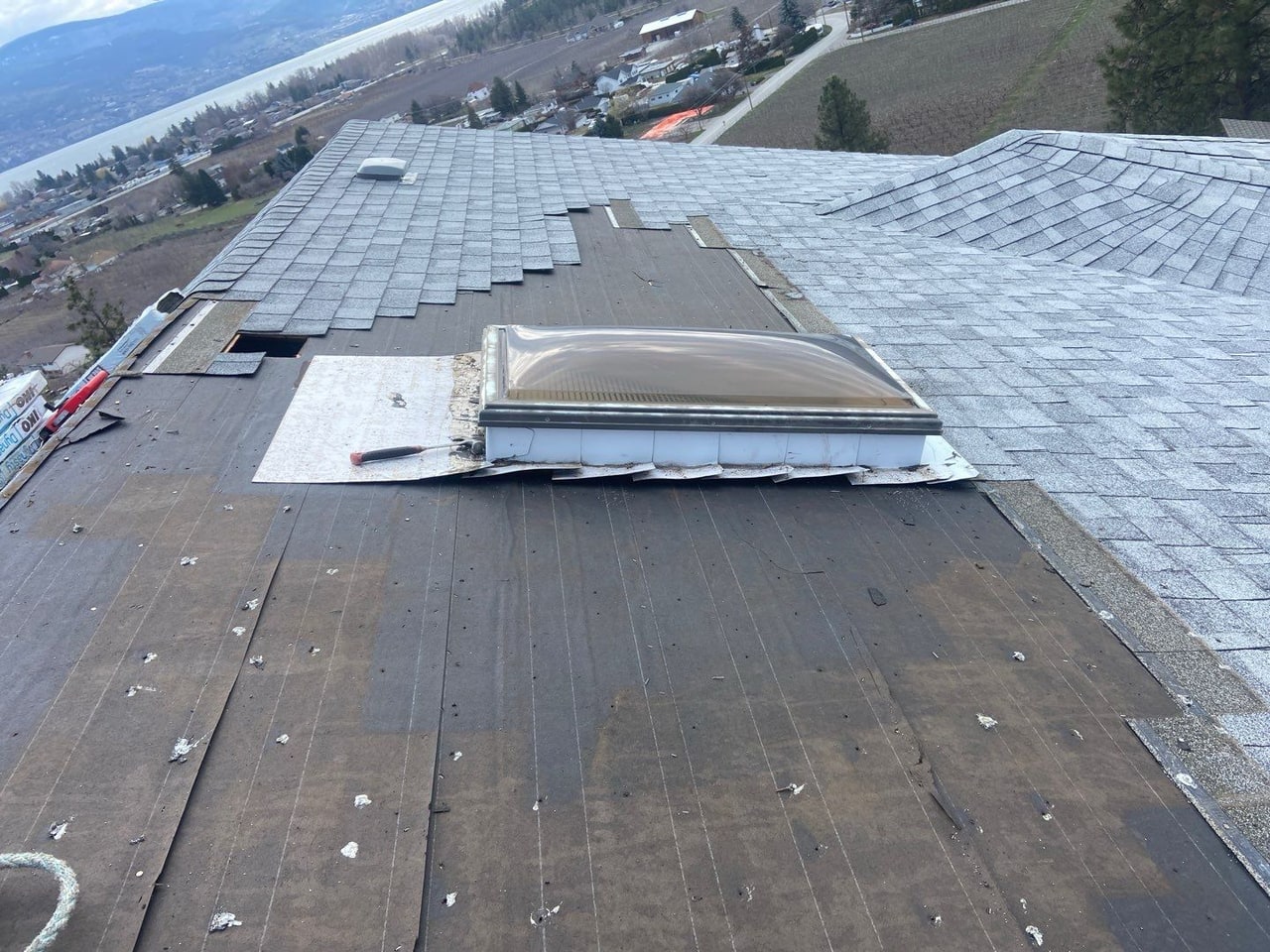
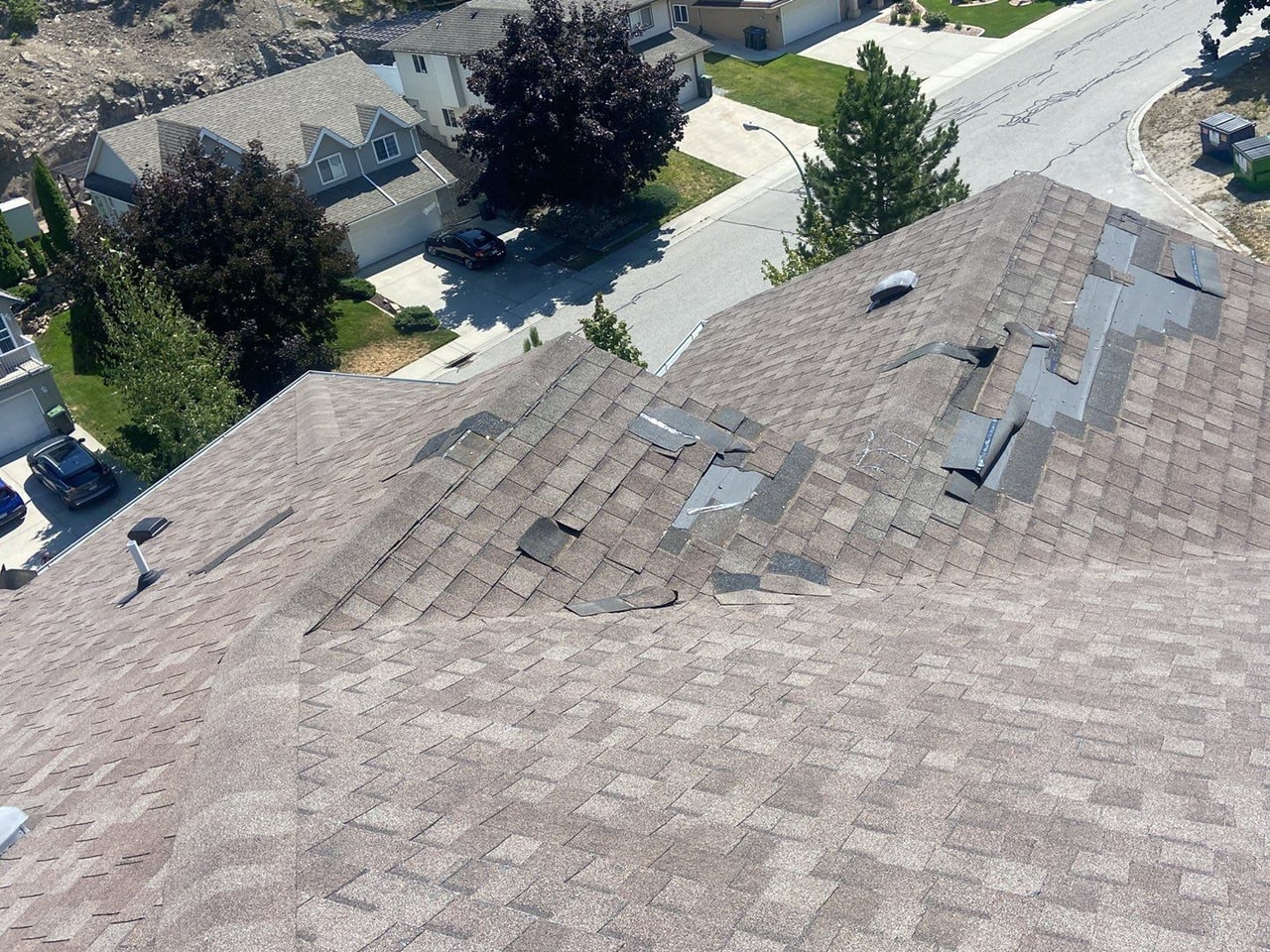
Kelowna’s wind comes off the lake and up the benches, and it arrives in gusts that load one slope of a roof much harder than the rest. Asphalt shingles hold on with a strip of adhesive that seals in the sun the summer they were installed. Once that seal is broken, by age, by heat cycling, or by one gust that lifted the tab and dropped it back, the next gust gets under it and peels the course. That is why storm damage runs in bands across a slope, like the photograph, and why the shingles that stayed on around the bare patch are usually not fine either.

Hail does its damage without taking anything off the roof. It knocks the granules out of the mat in a bruise the size of a coin, which lets UV at the asphalt underneath, and that spot cracks through in a year or two. From the ground a hailed roof looks untouched. Trees do the opposite: obvious damage on top, and cracked decking underneath that nobody sees until the next rain comes through it.

When the Tower Ranch windstorm stripped shingles across the neighbourhood, Castanet spoke to Premium Roofing’s crews as they worked through the repairs. Same crews, same phone number.
The storm was the cheap part. The wait is not.

Storm damage has a clock on it twice over: the rain that follows the wind, and the window in which the damage can still be tied to the event for a claim.

The day after

Open deck, broken seals

A bare patch of underlayment or plywood and a band of shingles with no seal strip. Nothing is wet yet. Photographed from the roof today, this is a clear storm claim and a straightforward repair.

Fix now: document, tarp, repair the section

The next rain

Water in the attic

Rain gets through the exposed deck and around the missing vent. Insulation below it gets wet, the ceiling stains, and the damage the insurer is looking at now includes the interior.

Fix now: repair plus insulation and drywall

The next wind

The band spreads

The unsealed shingles around the original patch go, and the edge metal that was lifted takes the courses above it. What was a section is now a slope. Hail bruises begin cracking through.

Fix now: a slope, not a section

Months later

Wear and tear, not a storm

The deck under the open area has been wet all winter and is soft. And an adjuster looking at a roof that has been open for months sees neglect and wear, not a wind event. The claim gets harder at exactly the moment the repair gets bigger.

Fix now: new deck, often a re-roof, likely at your cost

We drew the whole sequence, stage by stage, with the roof section changing as you scroll.

The cost of waiting

Document. Make safe. Then fix it once.

The order matters for the roof and for the claim. Evidence first, because a repair destroys it. Mitigation second, because your insurer expects it. Then the permanent repair, with the whole affected area checked, not just the bare patch.

Step 01

Photograph it from the roof, with dates

Before anything is touched: dated photographs of every damaged area from the roof, close and wide, plus the surrounding courses, the vents, the edge metal and any hail marks on the soft metals. That goes into a written condition report describing what failed and what it was caused by, which you can hand straight to your adjuster. A repair made before the photographs is a repair the insurer cannot see.

Step 02

Make it safe the same visit

Exposed deck gets a properly secured tarp or peel-and-stick membrane. A missing vent gets covered. Loose edge metal gets fastened down so it does not take the next course with it. Insurers expect you to prevent further damage after a storm, and a documented temporary measure is exactly that, so it is photographed too.

Step 03

A written, flat-rate quote for the claim

The quote describes the repair in the terms an adjuster works in: what comes off, what goes on, what the deck needs, and the surrounding area that has to be resealed or replaced because its seal strips are broken. Flat-rate, with anything that could move it named up front. If the adjuster writes a scope, we work to it and tell you plainly where we think it is short, because a scope that only covers the bare patch leaves you with a slope that blows off next spring.

Step 04

Repair the whole affected area

Damaged courses come up and any cracked or wet decking is replaced. Underlayment is renewed, vents and caps go back in and get flashed into the courses properly, and new shingles are woven into the surrounding field so the repair does not read as a patch. The shingles around the damage are checked one by one: any with a broken seal strip are resealed or replaced. On a flat roof, lifted perimeter membrane and edge metal are re-secured and re-flashed in matching material.

Step 05

Close the file

Photographs of the finished repair, the invoice matching the quote, and a note on anything else we saw up there that the storm did not cause but you should know about. If the adjuster has questions about the roofing side, they can ask us directly. We do not waive deductibles, and we are not anyone’s approved vendor. We work for you.

Repair, or replace?

A section of blown-off shingle, a lost vent or a branch hole on a roof with life left is a repair, and the new material blends into the field.

If the storm took shingles off because every seal strip on the roof had already let go, or hail bruised every slope, or the roof was at the end of its life before the wind found it, patching one band is money spent twice and the insurer may see it the same way. We will tell you which on the first visit, and it goes in the report. Replacements are done by Premium Roofing, same crews and same phone number. How we decide.

What storm damage repair costs

We do not quote a roof we have not seen. What moves the number is how much came off, whether the deck and underlayment were exposed to rain, how many of the surrounding courses have broken seals, and access.

What you can count on: the inspection, the photographs and the written quote are free, pricing is flat-rate, and anything that could change the number is named before work starts, not on the invoice. That is also exactly what an adjuster wants to see. Whether the claim is covered, what your deductible is and how depreciation applies are questions for your policy and your insurer, not us.

Storm damage and claim questions.

If water is coming in, call us first so the roof gets made safe, then call your insurer. Insurers expect you to prevent further damage, and a documented temporary measure is exactly that. If nothing is coming in, either order works, but having dated photographs from the roof and a written condition report before the adjuster visits makes the claim far simpler.
As general guidance, not legal advice: most policies cover sudden, accidental events such as a windstorm, hail or a fallen branch, and do not cover wear and tear, so a roof that was already at the end of its life can be a harder claim. Deductibles apply, and older roofs may be paid out at a depreciated value. Your policy and your adjuster decide. What we provide is the evidence.
No to both. We do not waive deductibles, which is a practice that lands homeowners in trouble, and we are not an approved or preferred vendor for any insurer. We work for you: we document the roof, make it safe, quote the repair at a flat rate, and provide whatever the adjuster needs from the roofing side.
After a hard blow, yes. The shingles that stayed on may have broken their seal strips, which you cannot see from the ground, and they will go in the next wind. Hail bruising is invisible from below. A look from the roof within a week or two of the storm is cheap and finds the damage while it can still be tied to the event.
That depends on your policy, and you should ask your insurer. From the roofing side, the sooner the damage is documented the easier it is to show it came from the storm rather than from the winter after it, so get photographs taken from the roof as soon as it is safe to be up there.
We do not quote a roof we have not seen. What moves the number is how much came off, whether the deck and underlayment were exposed to rain, whether the surrounding courses are still sealed, and access. The inspection and written quote are free, pricing is flat-rate, and anything that could move the number is named before work starts, which is also what the adjuster wants to see.

After the weather.

Something up there isn't right?

Tell us what you are seeing and we will come and find out what is causing it. Estimates are free, written down, and honest about whether the roof is worth repairing.

250-258-8600

Free estimates • Kelowna, West Kelowna, Lake Country & Peachland