Home Repairs Roof Leak Repair Emergency & Storm Response Shingle Repair Flat & Commercial Roof Repair Flashing, Chimney & Vent Repair Ice Dam & Winter Damage Storm Damage & Insurance Claims Skylight Leak Repair Roof Maintenance Programs More The Cost of Waiting Repair vs Replace FAQ Contact & Service Area Call 250-258-8600
  1. Kelowna Roofing Repairs
  2. Skylight Leak Repair

Skylight Leak RepairKelowna & the Okanagan

A skylight that drips is usually a flashing problem, sometimes a condensation problem, and only rarely a glass problem. Each one is fixed differently, and the wrong fix leaks again by the next storm. We work out which one you have before anything gets touched.

Call 250-258-8600

Leaking right now? Call and say so. Emergency calls are answered 8 am–5 pm weekdays, weekends by arrangement for a fee. An active leak gets a temporary measure first, then a proper repair once the roof is dry enough to do it right.

Call 250-258-8600

The signs, and what each one points to.

Where the water shows up around a skylight, and when, tells us most of what we need to know before we get on the roof.

A stain at one corner of the light well

Water running down the drywall on one side of the shaft, usually the uphill corner. The classic sign of a failed head or step flashing, where the roof meets the top or sides of the unit.

Drips only in wind-driven rain

A shower does nothing, a sideways storm off the lake puts water on the floor. Pressure is forcing water up under a flashing lap that gravity alone leaves alone. Flashing, not glass.

Water on the glass from the inside, in cold weather

Beads on the pane, a wet sill, drips off the bottom edge on a clear January morning. That is condensation on the coldest surface in the room, not a roof leak, and it is fixed with airflow, not flashing.

Fog or moisture between the panes

A cloudy patch you cannot wipe off either side. The seal in the glazing unit has failed and let air in. The unit gets replaced; nothing on the roof fixes it.

Cracked or crazed acrylic dome

Older bubble skylights go brittle and yellow in Okanagan sun. Hairline cracks radiating from a corner or a fastener let water straight through, and the dome is usually past resealing.

Lifted or rusted flashing from outside

From the ground or a ladder: a head flashing sitting proud of the shingles, step flashings with a shadow line under them, sealant pulled away from the frame, or rust streaks running down from the corners.

Debris packed against the uphill side

Needles and leaves dam against the top of the curb, hold water against the head flashing and rot the shingles above it. Common under pines, and a leak waiting for the next heavy rain.

Ice around the skylight in winter

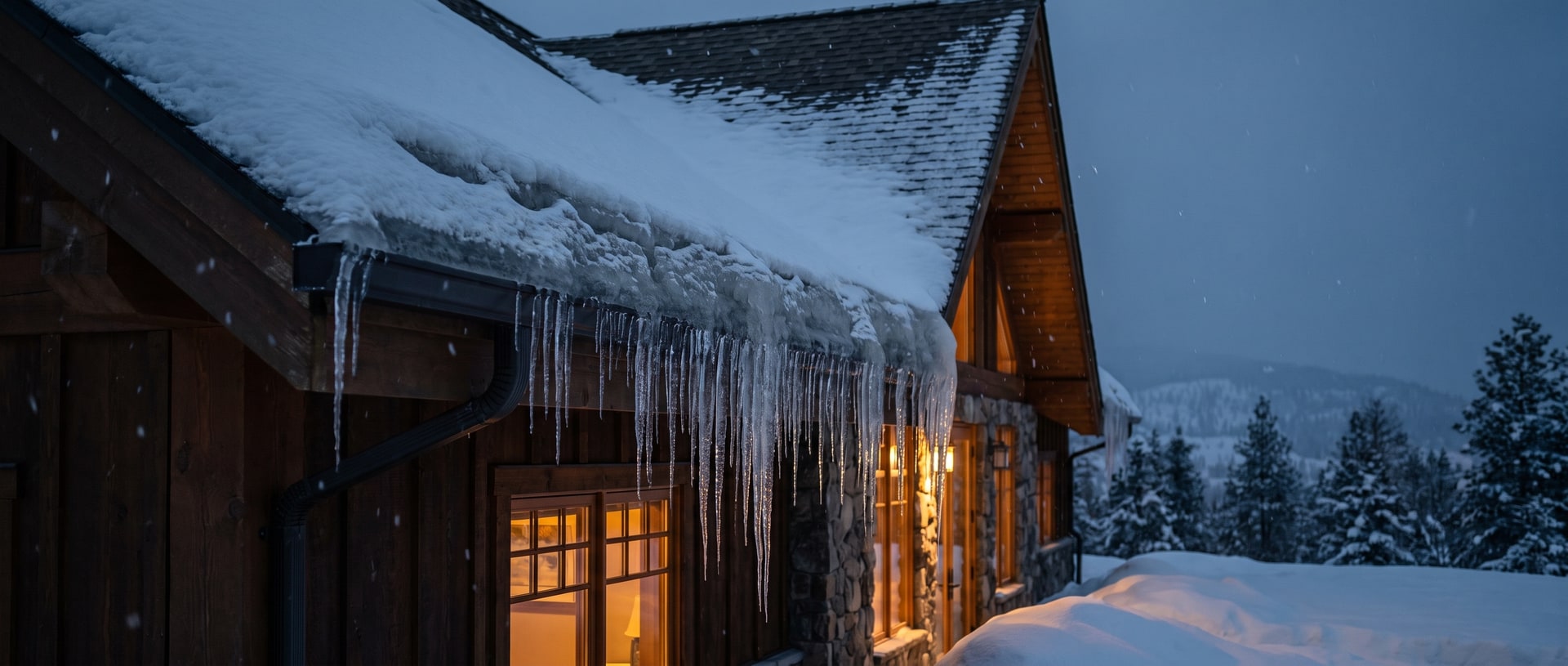
Warm glass melts the snow above it, the water refreezes at the cold edge of the unit, and the next melt backs up under the flashing. A different problem again. See ice dam repair.

A hole in the roof, by design.

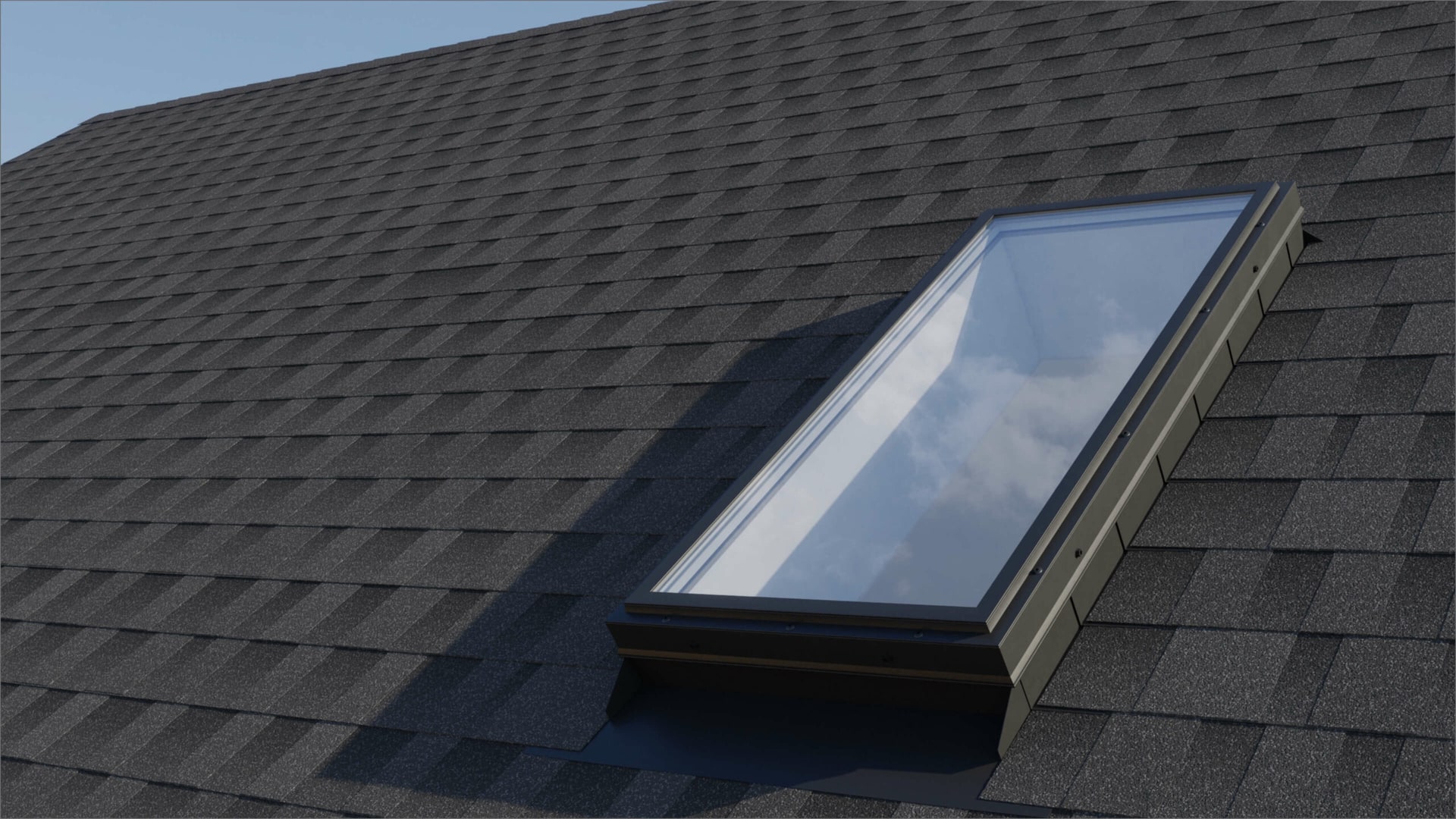
A skylight is a deliberate opening in the roof with four edges that all have to shed water, and it sits in the sunniest part of the house. The glass and the frame are built for that. The flashing around them is metal and membrane and sealant, and in Kelowna all three get worked hard: hot decks in July, freeze-thaw for weeks in winter, and rain that comes in sideways off the lake.

Step flashings along the sides rely on each piece lapping the next; one lifted by a nail pop or a foot lets water track behind the rest. The head flashing across the top takes the whole slope’s runoff and dams needles against it. Sealant at the frame shrinks and cracks years before the unit wears out. And on older curb-mounted units, the curb itself, a wooden box under the skylight, rots quietly from the top down once the cap sealant goes.

Then there is the one that is not a leak at all. Skylight glass is the coldest surface in a room, so a humid bathroom or kitchen in a cold snap condenses water onto it and runs it down the frame. From inside it looks identical. It is fixed completely differently.
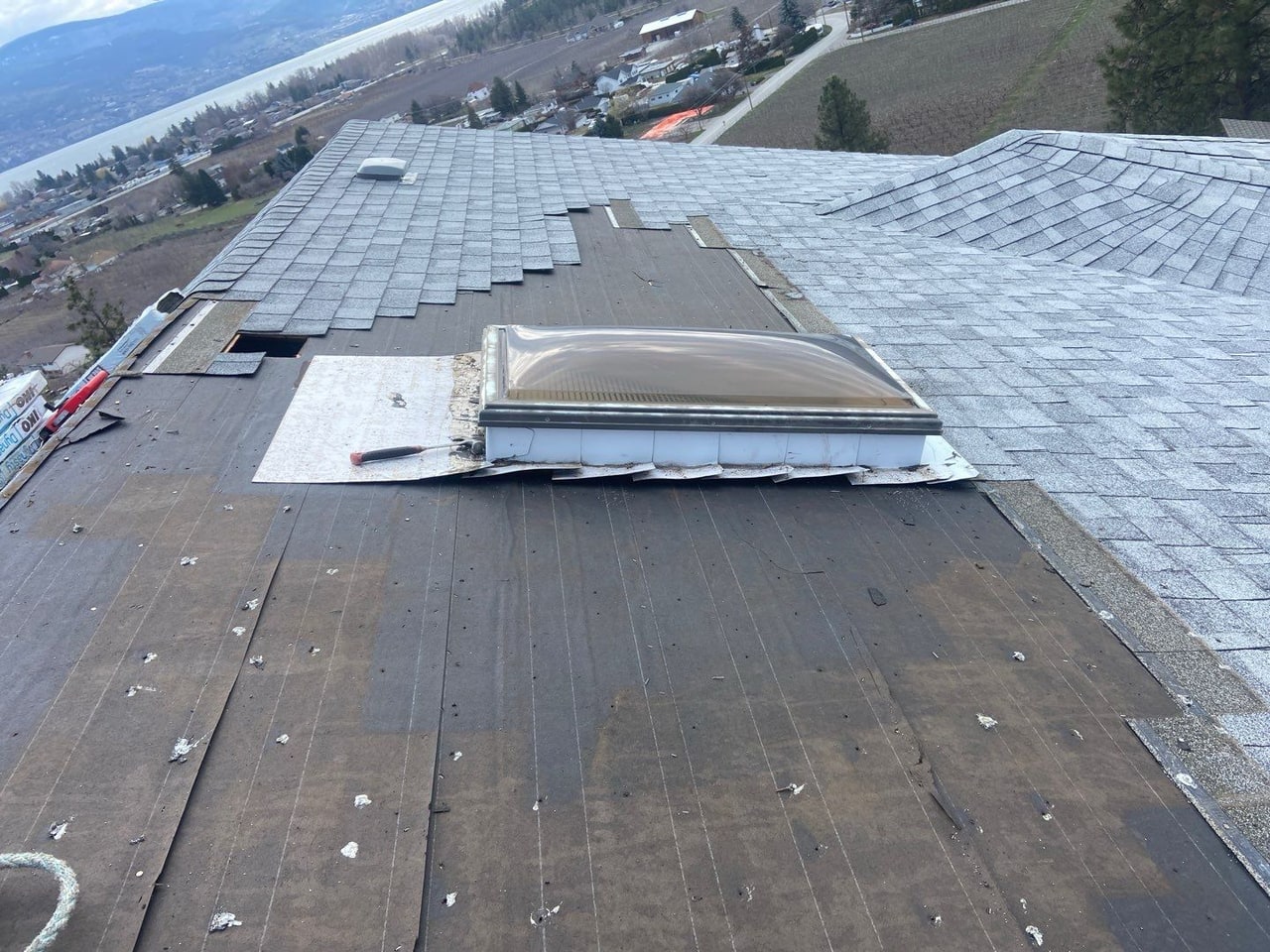
The well is the expensive part.

A skylight leak runs straight down the shaft into finished space, so the interior damage starts earlier than with a leak in the attic. And the wood around the opening is exactly the wood that holds the unit up.

First rains

A stain in the light well

Water tracks behind a flashing, follows the curb or the frame down, and shows on the drywall of the shaft. Wipe it, it comes back with the next storm. The flashing is still repairable and the deck around it is dry between rains.

Fix now: a reseal or reflash

Weeks to months

Drywall and the curb go soft

The shaft drywall swells and bubbles. On a curb-mounted unit the wooden curb stays wet, and the deck and rafters framing the opening start to take water at the corners.

Fix now: reflash plus a drywall patch

A season

Mould in the shaft, rot in the curb

A light well is a warm, damp, enclosed box, which is what mould wants. The curb rots enough that fasteners pull, the unit shifts, and the flashing that was marginal is now open. Insulation around the shaft is saturated.

Fix now: new curb, new unit, remediation

A year or more

The framing goes

Headers and trimmers around the opening delaminate. Sheathing downhill of the unit is rotten. The shingles below have been sitting on wet deck and lose their hold. Now the job is a section of roof, an opening rebuilt, and a ceiling.

Fix now: structure, deck, often a re-roof

We drew the whole sequence, stage by stage, with the roof section changing as you scroll.

The cost of waiting

Rule out the glass. Fix the edge.

Most skylight callbacks are a bead of sealant over a flashing that needed replacing. The sequence below is how it gets done once.

Step 01

Leak or condensation

First question, every time. Where is the water, and when does it come: in rain, or in cold dry weather? Is the pane wet on the inside face? Is there a bathroom fan or a kitchen under it, and does it vent outside? If it is condensation, we tell you so and what to do about it, and nothing on the roof gets opened up.

Step 02

Inspect the unit and the perimeter

On the roof: the head flashing, each step flashing, the sill or apron, the counterflashing or cladding at the frame, the sealant at every joint, the fasteners, and the curb on curb-mounted units. Then the glazing itself for fog between panes, a cracked dome, or a perished gasket. Then the shingles or membrane uphill for anything sending extra water at the unit. A water test isolates the section if nothing obvious shows.

Step 03

Stop the water if it is active

If it is raining into the well, a temporary cover or a properly secured tarp over the unit holds it until the roof is dry enough to reflash. Sealant smeared over wet flashing is not a repair and we do not sell it as one.

Step 04

Reflash, reseal, or replace the unit

A failed perimeter gets a proper reflash: shingles lifted back, the opening wrapped in ice-and-water membrane, a new flashing kit fitted, matched to the manufacturer’s where one exists, and the courses relaid. A rotten curb gets rebuilt or replaced before the flashing goes back on. Where the glazing seal has failed, the dome is crazed, or the flashing kit is no longer made, we replace the unit, because new flashing around a failing skylight is money spent twice. VELUX and Columbia are the brands we install.

Step 05

Tell you what else we saw

Other skylights on the same roof are usually the same age and the same flashing, so we look at them while we are up there and write down what is coming, with photographs. If the deck or the well drywall took water, that is in the report too, so the next thing is planned instead of another emergency.

Reflash it, or replace it?

If the unit is sound and the flashing has failed, a reflash is the repair, and a good one lasts as long as the roof around it.

If it is an old acrylic dome, the glazing seal has gone, the frame is corroded, or the manufacturer no longer makes a flashing kit for it, replacing the unit is usually the better money. And if the roof around the skylight is at the end of its life, the honest answer is to do both at once. New installs and replacements are done by Premium Roofing, same crews and same phone number. How we decide.

What a skylight repair costs

We do not quote a roof we have not seen. What moves the number is whether it is a reseal, a full reflash or a new unit, the pitch and access, whether the curb needs rebuilding, and whether water has got into the deck or the well.

What you can count on: the inspection and written quote are free, pricing is flat-rate, and anything that could change the number is named before work starts, not on the invoice. If it turns out to be condensation, you get told that and a plan, not a roofing bill.

Skylight questions.

Often condensation. Skylight glass is the coldest surface in the room, so in a humid house, especially a bathroom or kitchen in a cold snap, moisture in the air condenses on it and runs down into the frame. It looks identical to a leak from inside and is fixed with ventilation and humidity control, not roofing. If it only happens in cold, dry weather and never in rain, that is the first thing we rule in or out.
Because the flashing has an opening that only fails under pressure. Wind-driven rain from one direction pushes water up under a head flashing or through a lifted step flashing, and a normal shower does not. That pattern points at the perimeter flashing rather than the glass or the seal.
Fog or moisture between the panes means the seal in the glazing unit itself has failed and let air in. That is not something a roofer can reseal from outside. The unit gets replaced. The good news is that a failed seal is a fogging problem, not usually a water-into-the-house problem, so it is rarely urgent.
If the unit is sound and the flashing has failed, reflash it. If it is an old acrylic dome, the glazing seal has gone, the frame is corroded, or the manufacturer no longer makes a flashing kit for it, replacing the unit is usually the better money, because you would be putting new flashing around something that is about to fail on its own. See repair vs replace.
It depends on whether it is a reseal, a full reflash or a unit replacement, on the roof pitch and access, and on whether water has damaged the deck or the drywall around the well. We do not quote sight-unseen. The inspection and written quote are free, pricing is flat-rate, and anything that could move the number is named before work starts.
Yes, through Premium Roofing. VELUX and Columbia are the brands we install. This site is for repairs, so if the answer is a new unit or you want to add one, that work goes to Premium, same crews and same phone number.

Other openings that leak.

Something up there isn't right?

Tell us what you are seeing and we will come and find out what is causing it. Estimates are free, written down, and honest about whether the roof is worth repairing.

250-258-8600

Free estimates • Kelowna, West Kelowna, Lake Country & Peachland