Home Repairs Roof Leak Repair Emergency & Storm Response Shingle Repair Flat & Commercial Roof Repair Flashing, Chimney & Vent Repair Ice Dam & Winter Damage Storm Damage & Insurance Claims Skylight Leak Repair Roof Maintenance Programs More The Cost of Waiting Repair vs Replace FAQ Contact & Service Area Call 250-258-8600
  1. Kelowna Roofing Repairs
  2. Roof Maintenance Programs

Roof MaintenanceKelowna & the Okanagan

Nearly everything that fails badly gives warning first: a lifting lap, a shrinking bead of sealant, a drain half full of needles. A scheduled visit is how those get found while they are still small. For houses, flat roofs, commercial buildings and strata.
Call 250-258-8600

Leaking right now? Call and say so. Emergency calls are answered 8 am–5 pm weekdays, weekends by arrangement for a fee. An active leak gets a temporary measure first, then a proper repair once the roof is dry enough to do it right.

Call 250-258-8600

The details, before they become leaks.

A roof does not wear out in the field. It fails at the details, in the same handful of places every time. A maintenance visit goes to those places on purpose.

Drains, scuppers and gutters cleared

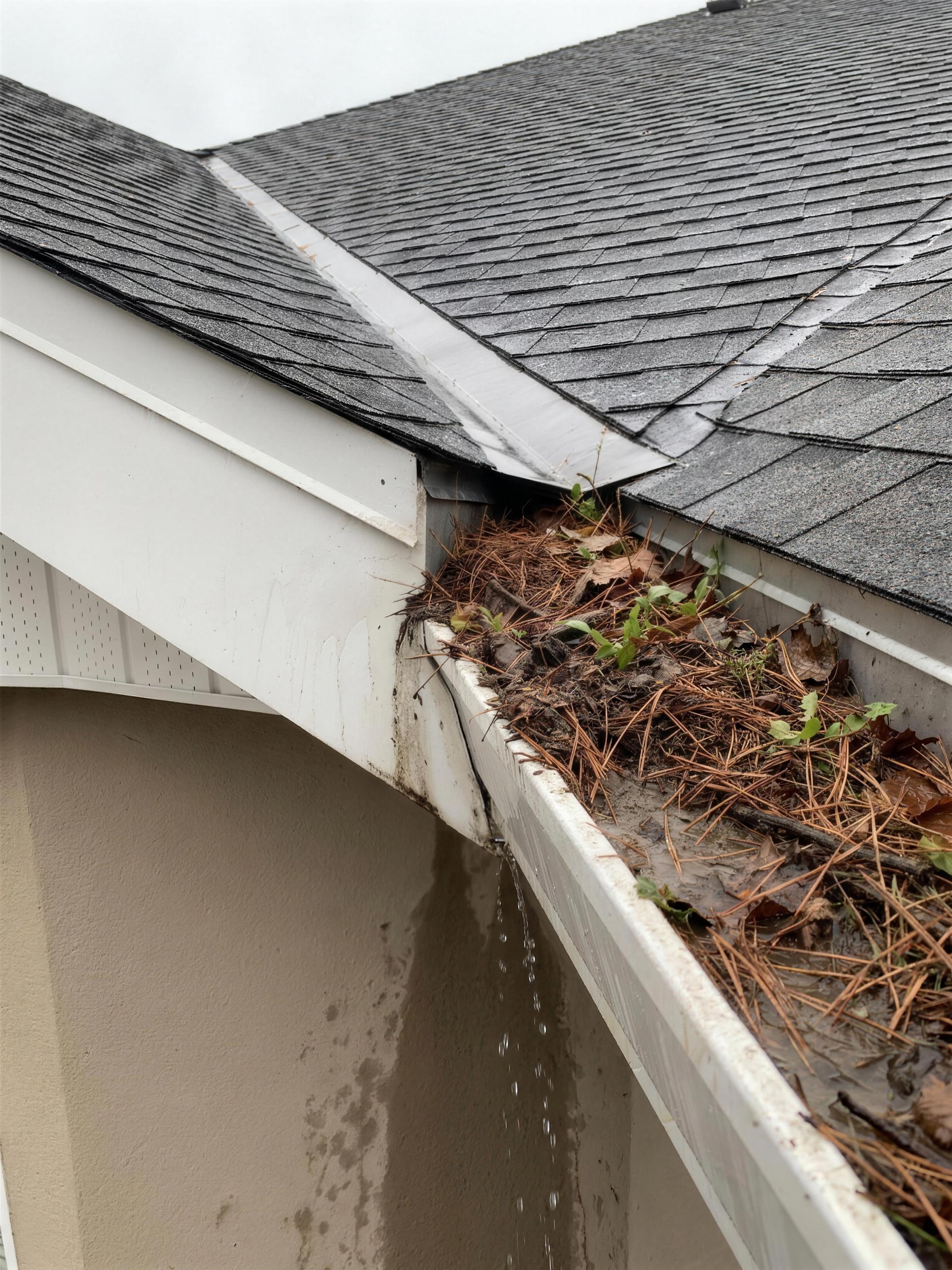
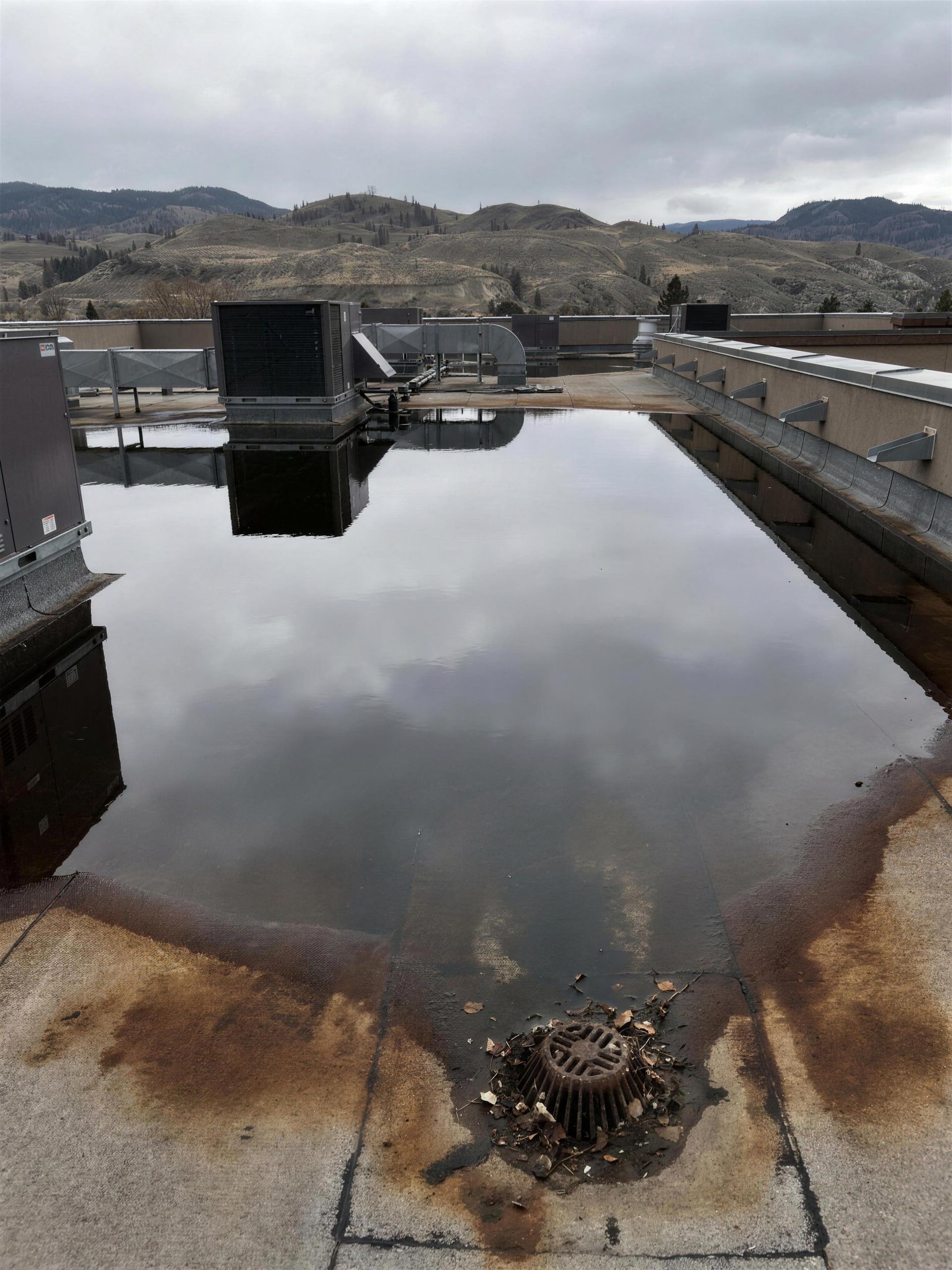
The single most common reason a flat roof holds water and a gutter runs down the wall. Needles and grit pack around a drain until it stops taking water. It is also the fastest thing on the list to put right.

Penetrations and terminations checked

Pipe boots, vents, curbs, pitch pans, reglets and termination bars. The details that fail years before the field does, and where nearly every leak starts.

Laps, flashings and edge metal looked over

Anywhere two materials meet or the roof stops. Open laps, lifted step flashing and loose edge metal get dealt with before wind or water gets into them.

Debris and organic growth off

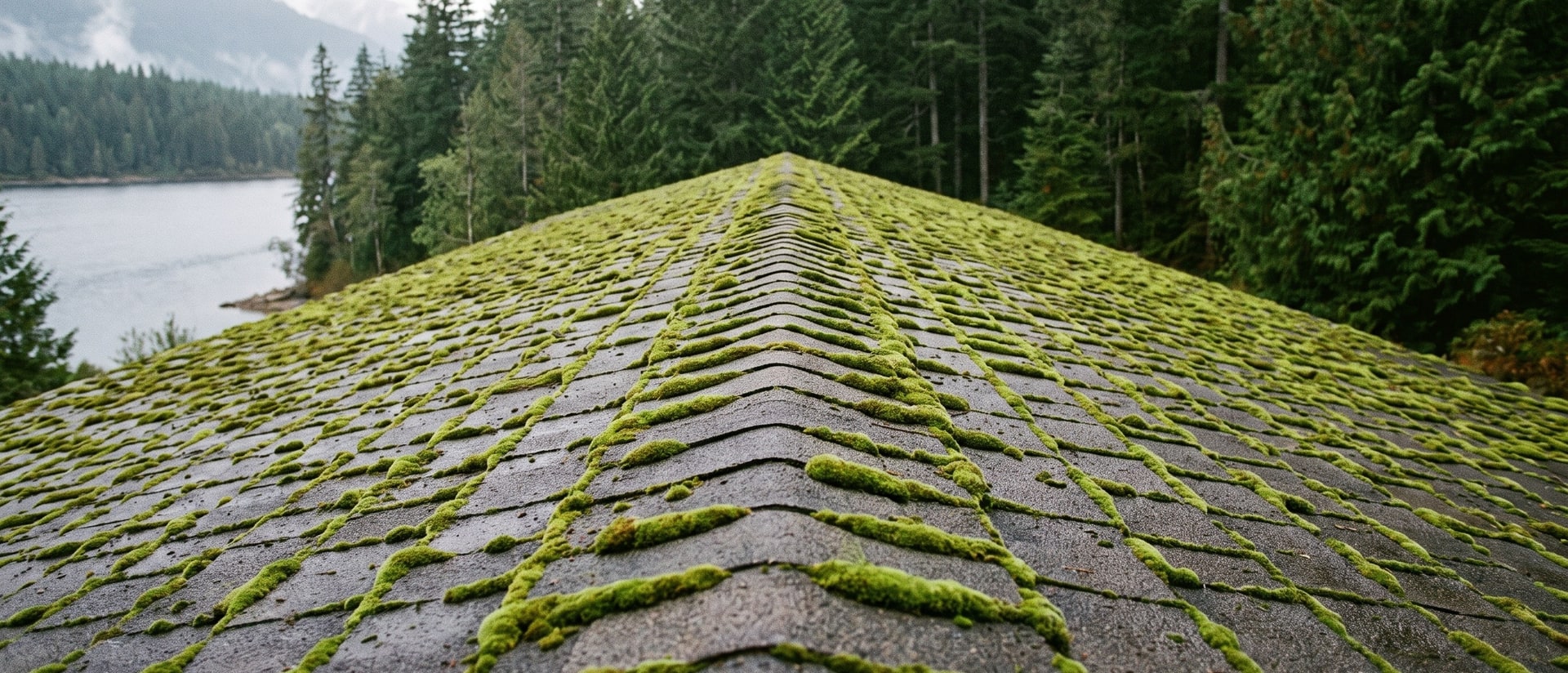
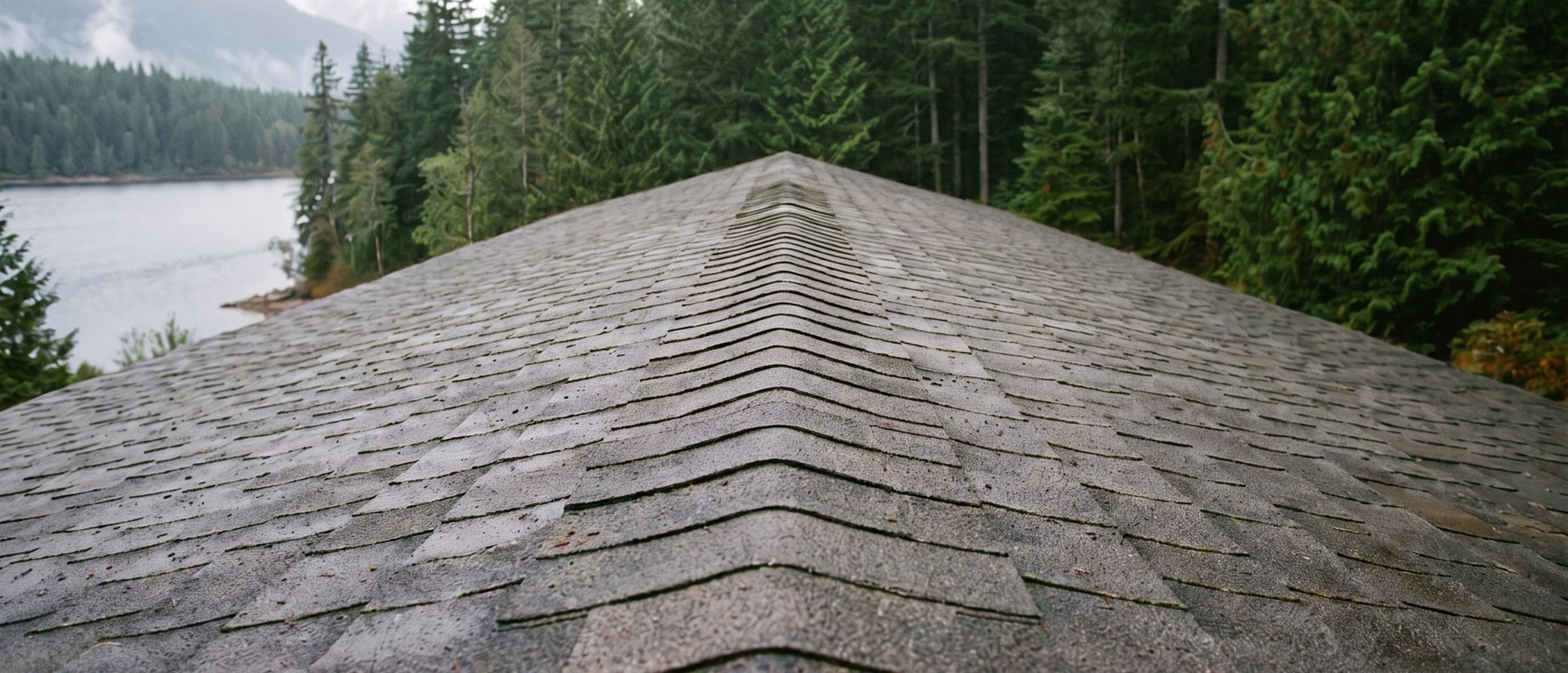
Needles, leaves and branches cleared, and moss caught while it is still a stain rather than a mat holding water against the shingle. Removed by hand and with low pressure, no chemical wash running into your garden or the lake. Where it keeps coming back, zinc strips near the ridge slow it down.

Sealant renewed on schedule

Reglets, counterflashing, pitch pans and skylight frames all rely on sealant with a shorter life than the roof around it. Renewing it when it is due is cheap; finding out it went two winters ago is not.

Small things fixed on the spot

Where it is minor and we have the material with us, a split boot, a lifted shingle, an open seam, it gets done on the visit rather than turned into a second trip and a second invoice.

A written record with photographs

What we saw, what we did, and what is worth watching. Over a few visits that becomes a history of the roof, which is exactly what you want when it is time to budget for the next thing.

Winter prep

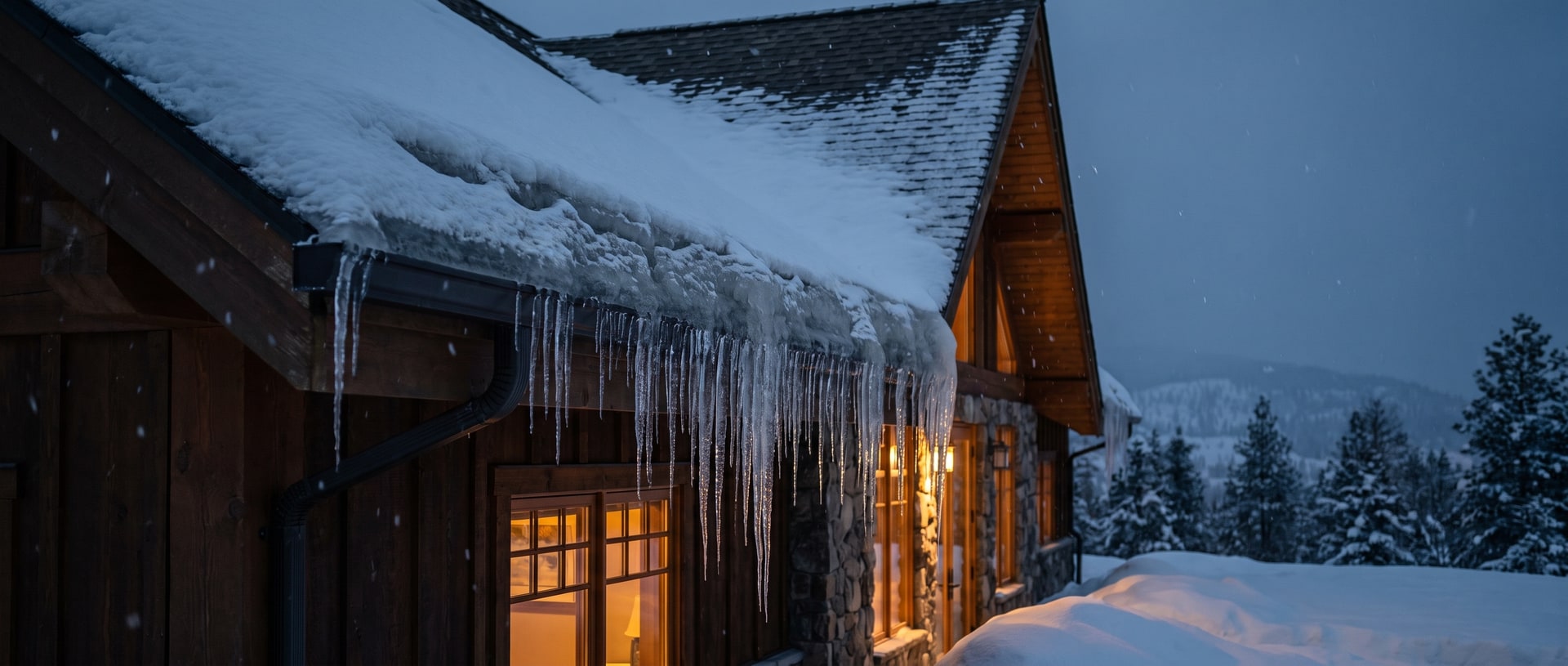
The autumn visit is timed for it: drains and valleys clear before the snow, heat trace checked where it is fitted, and the eaves and skylights looked at for anything that will dam ice. See ice dam repair.

The pines, the sun, and the freeze.

Kelowna roofs live under ponderosa pines that drop needles all year and heaviest in autumn. Needles do not blow off a roof the way leaves do. They pack into valleys, gutters and drains, hold water against whatever they are sitting on, and turn a flat roof into a pond by the first November rain.

Then the sun: hot decks in July that shrink sealant and go through a pipe boot in a few seasons. Then the freeze: weeks of thaw-and-refreeze that pry open every lap, crack and hairline that the summer started. And on the shaded north slopes, moss takes hold fast, lifts the courses as it thickens and keeps the shingle wet long after the weather has cleared.

None of that is a roof failing. It is a roof being used. The difference between a roof that lasts its full life and one that does not is usually whether somebody went up once a year and dealt with it.

Every leak was a maintenance item first.

The sequence below is what a missed detail turns into. A scheduled visit is designed to stop it at the first stage, where the fix is an hour on the roof rather than a ceiling.

This visit

A detail on the list

A drain half full, a bead of sealant starting to pull, a boot with the first crack in it, moss as a green stain on the north slope. Nothing is leaking. This is where maintenance lives, and where the fix is cheapest.

Dealt with: on the visit

Missed one season

It becomes a repair

The drain blocks and the roof ponds. The sealant opens and water gets behind the flashing. The boot splits. The moss lifts the course. Now it is a callout, and the first stain is on the ceiling.

Fix now: a repair visit

Missed two

The deck and the inside

Water has been getting in for a year. Sheathing around the detail is wet and swelling, insulation under it is saturated, and the drywall needs replacing along with the repair.

Fix now: repair, deck, drywall, insulation

Missed for years

A roof with no life left

Ponding has cooked the membrane. Moss has rotted the courses and the deck under them. Fasteners have lost their grip and the wind has started taking shingles that were fine. What would have been a few visits is now a re-roof and a renovation.

Fix now: replacement plus the interior

We drew the whole sequence, stage by stage, with the roof section changing as you scroll.

The cost of waiting

Once a year. Twice a year. After the weather.

How often a roof needs looking at depends on what kind of roof it is and what is above it. These are the schedules we set up, and each one is adjusted to the roof after the first visit.

Pitched

Most pitched roofs: once a year

Usually autumn, once the pines have dropped and before the weather turns. Gutters and valleys cleared, penetrations and flashings checked, sealant renewed where it is due, and any moss taking hold on the shaded slopes dealt with while it is still small. Under heavy tree cover, or on a roof with a lot of penetrations, a spring visit as well.

Flat

Flat and commercial roofs: twice a year

Spring and autumn. A flat roof depends on its drainage far more than a pitched roof does, and a blocked drain in November is a pond all winter. Drains and scuppers cleared, laps and terminations walked, blisters and splits caught before they open, pitch pans and reglets resealed, and mechanical curbs and penetrations checked, because those are where a commercial roof leaks.

Storm

After any major storm

A hard blow or a heavy snow load is worth a look even if nothing is showing inside. Wind damage is routinely worse from up there than it looks from the ground: a course that stayed on can still have broken its seal strip and will go in the next blow. If you are on a program, a post-storm check is a call, not a new job.

Strata

Commercial and strata programs

Multi-building sites get a report per building, every visit: what we saw, what we did, and what is worth watching, with photographs. Over a few visits that becomes a history of each roof and a budget forecast, so a council or a property manager can plan the spend rather than react to it. Repairs that come out of a visit are quoted separately and done on the schedule that suits the building.

Scope

Roof work only

Maintenance is roof work, so it stops where the roof does. We do not do interior work, and we are not going into your attic unless there is a specific reason we have to, such as tracing a leak. If we find something that needs a different trade, an electrician for heat trace, a plumber for a vent, it goes in the report.

When maintenance is not the answer

Maintenance keeps a sound roof sound. It does not bring back a roof that is finished. If the first visit finds a membrane that is brittle and splitting in the field, shingles bald across whole slopes, or a deck that is soft underfoot, we will say so rather than sign you up for visits that cannot help.

At that point the money is better spent on a new roof, and that work goes to Premium Roofing, same crews and same phone number. How we decide.

What a maintenance visit costs

We do not quote a roof we have not seen. A visit is priced by roof size, pitch, access, and the number of penetrations and drains that need attention, and it is quoted after a first look at the roof.

What you can count on: the first inspection and the written quote are free, pricing per visit is flat-rate, and anything found on a visit that goes beyond maintenance is quoted separately before it is done, not added to the invoice.

Maintenance questions.

On a flat roof especially, yes. Nearly everything that fails badly gives warning first: a lifting lap, an open sealant joint, a drain half full of needles. Catching those on a scheduled visit costs a fraction of the interior damage they cause when they are missed, and it keeps a repair as a repair instead of turning it into a re-roof.
Most pitched roofs once a year, in autumn once the pines have dropped and before the weather turns. Flat and commercial roofs twice a year, spring and autumn, because they depend on their drainage far more than a pitched roof does. And any roof after a hard blow or a heavy snow load, even if nothing is showing inside.
Drains, scuppers and gutters cleared; every penetration, flashing, lap and termination looked at; debris and moss off; sealant renewed where it is due; anything minor fixed on the spot where we have the material with us; and a written record with photographs of what we saw, what we did and what is worth watching.
Yes. Multi-building programs get a report per building and, over a few visits, a history of each roof that becomes a budget forecast: what was done, what is coming, and roughly when. It is set up so a strata council or property manager can plan the spend rather than react to it.
No. Maintenance is roof work, so it stops where the roof does. We do not do interior work, and we are not going into your attic unless there is a specific reason we have to, such as tracing a leak.
It is priced per visit by roof size, pitch, access and the number of penetrations and drains, and quoted after a first look at the roof. We do not quote sight-unseen. The first inspection and the written quote are free, pricing is flat-rate, and anything that could move the number is named up front.

What a missed visit turns into.

Something up there isn't right?

Tell us what you are seeing and we will come and find out what is causing it. Estimates are free, written down, and honest about whether the roof is worth repairing.

250-258-8600

Free estimates • Kelowna, West Kelowna, Lake Country & Peachland