Why It Happens Here
Sun on one slope. Moss on the other.
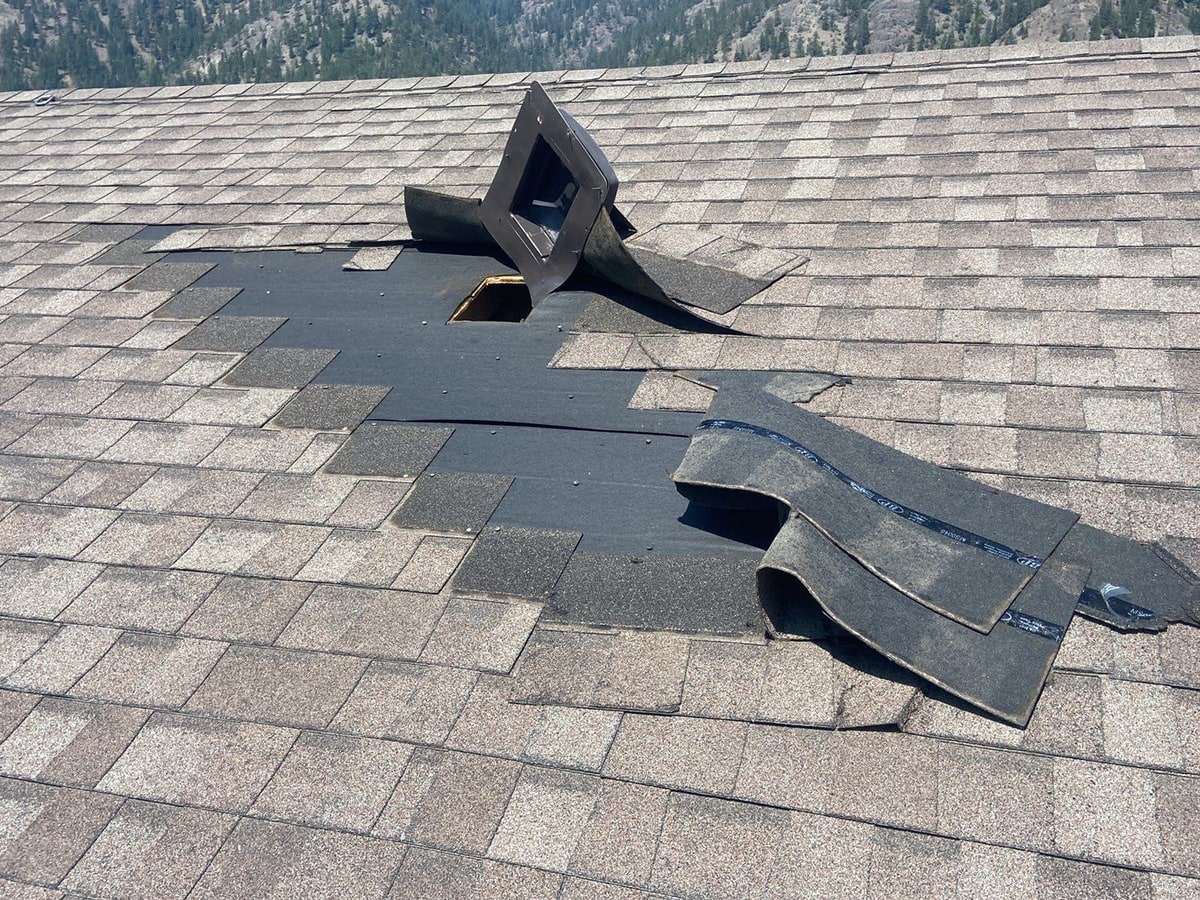
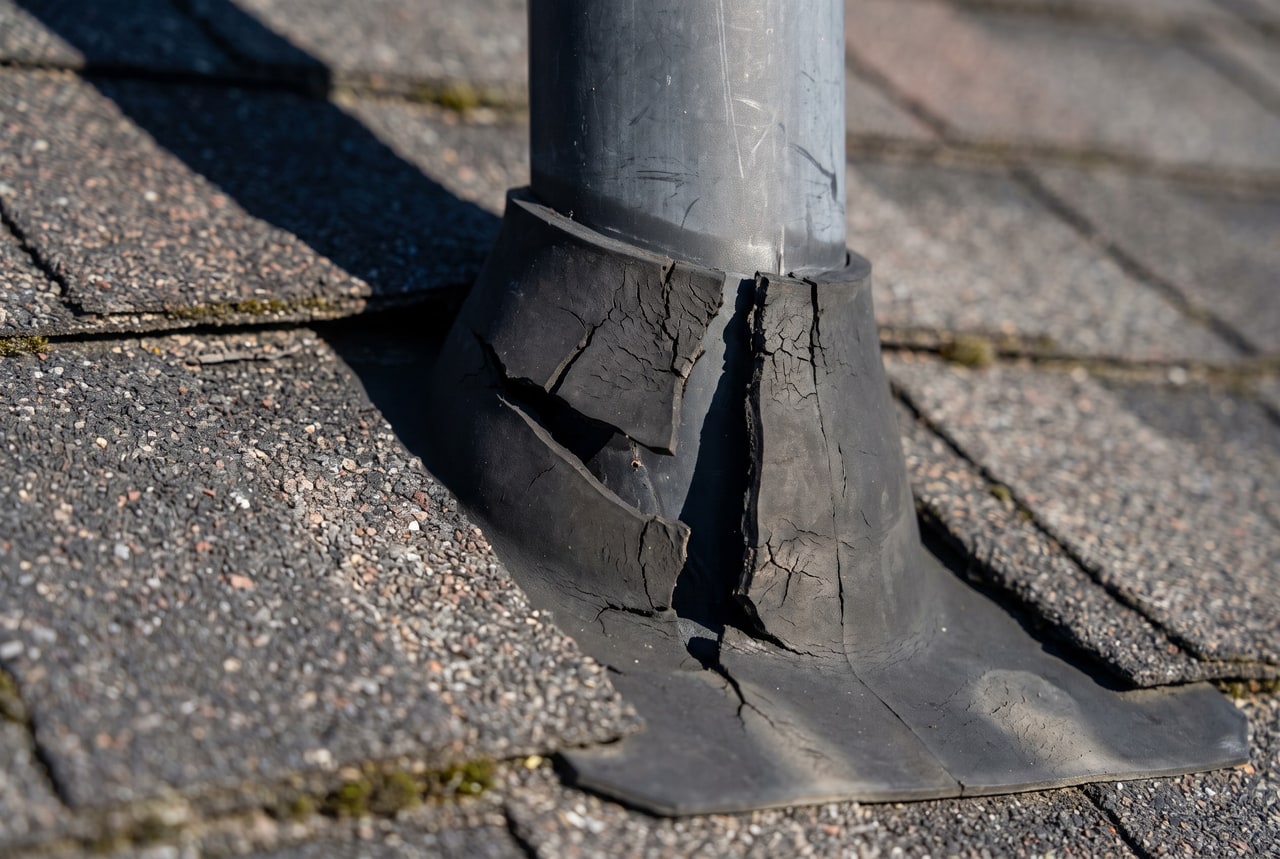
An asphalt shingle is a fibreglass mat, asphalt, and a layer of granules to keep the sun off the asphalt. Kelowna gives it more sun than most of the country, on a south slope that can run well above air temperature all summer. The asphalt dries, the mat goes brittle, the seal strip that bonds each course to the one below bakes until it no longer bonds. Then a wind off the lake finds the one tab that has let go.
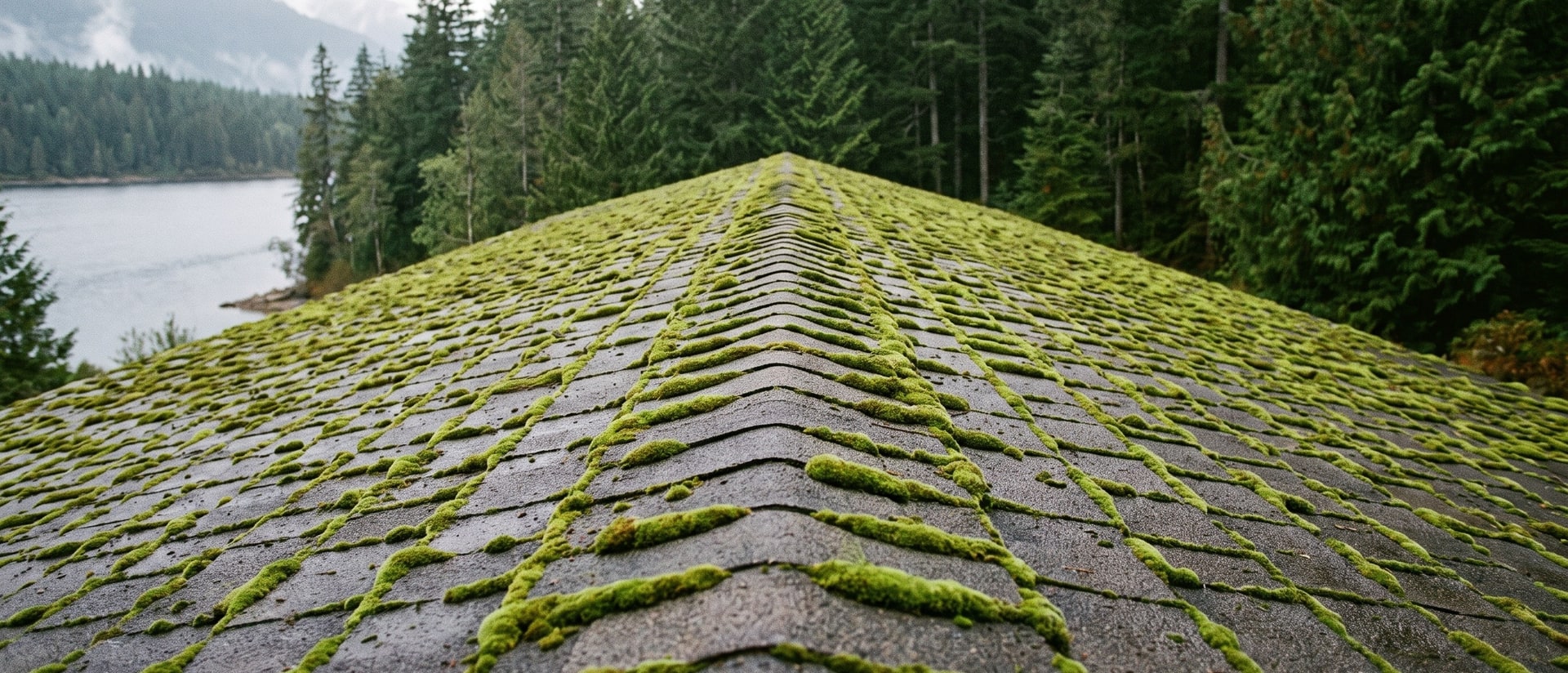
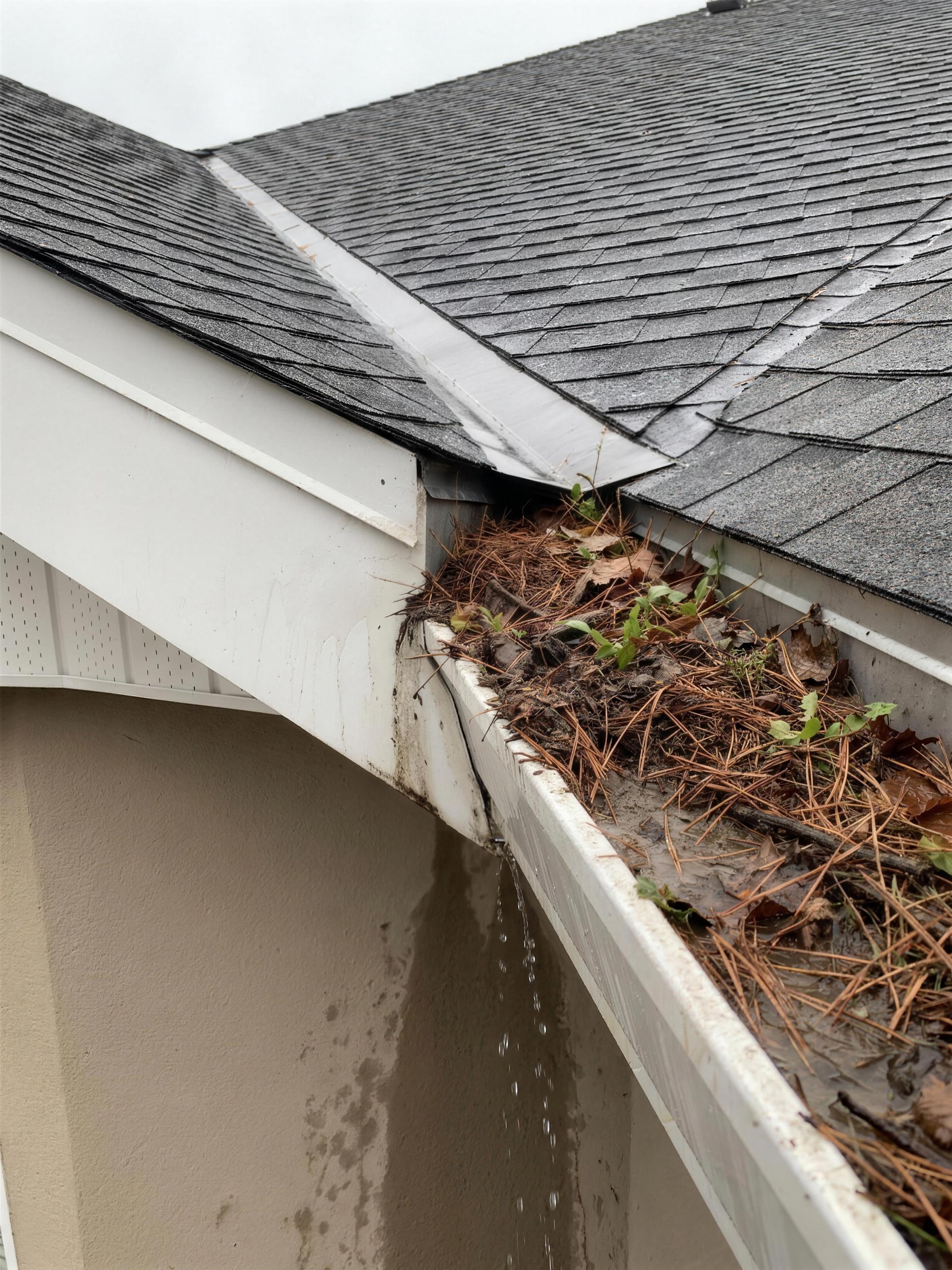
The north slope has the opposite problem. Under the pines it stays shaded and damp, needles collect in the valleys, and moss takes hold. Moss does not just sit on the surface; it grows under the shingle edges, lifts them, and holds water against the mat through every freeze-thaw cycle of the winter. Ice forming in that water pries the courses apart a little more each time.
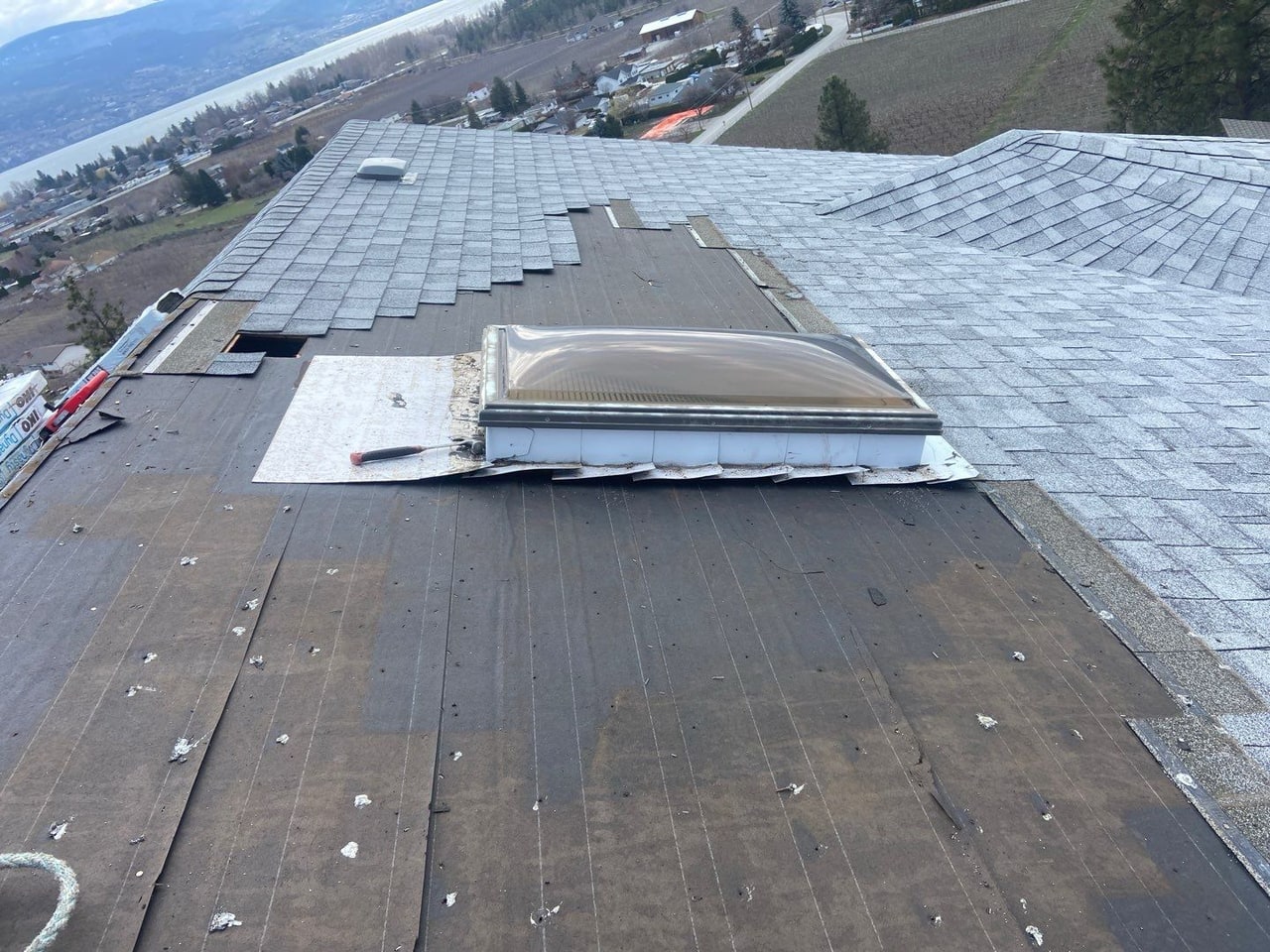
Add the wind, which loads edges, ridges and the lake-facing slope far harder than the middle of the field, and you get the pattern we see on almost every call: a roof that is mostly fine, with one band or one slope that is not.