Home Repairs Roof Leak Repair Emergency & Storm Response Shingle Repair Flat & Commercial Roof Repair Flashing, Chimney & Vent Repair Ice Dam & Winter Damage Storm Damage & Insurance Claims Skylight Leak Repair Roof Maintenance Programs More The Cost of Waiting Repair vs Replace FAQ Contact & Service Area Call 250-258-8600
  1. Kelowna Roofing Repairs
  2. Roof Leak Repair

Roof Leak RepairKelowna & the Okanagan

Water almost never comes in where it shows up. It gets in at one small detail, travels along whatever the structure gives it, and drips out somewhere else. We find the entry point, stop the water, and fix the detail that actually failed.
Call 250-258-8600

Leaking right now? Call and say so. Emergency calls are answered 8 am–5 pm weekdays, weekends by arrangement for a fee. An active leak gets a temporary measure first, then a proper repair once the roof is dry enough to do it right.

Call 250-258-8600

The signs, from inside and out.

Not every one of these is a leak, and not every leak shows all of them. But if two or three are on your list, water is getting in somewhere.

A brown ring on the ceiling

The classic. A tan or brown stain with a darker edge, often near an exterior wall, a light fixture or a bathroom fan, and often growing a little after each rain.

Dripping only in certain weather

Wind-driven rain from one direction, a heavy downpour after a dry spell, or a thaw after snow. The trigger tells us a lot about the entry point.

Bubbling paint or sagging drywall

Water collecting behind a finish. If the drywall is bowing, it is holding water and needs draining before it lets go on its own.

A musty smell in a closet or attic

Wet insulation or sheathing you cannot see. Often the first sign of a slow leak that has been running for months.

Water around a skylight, chimney or vent

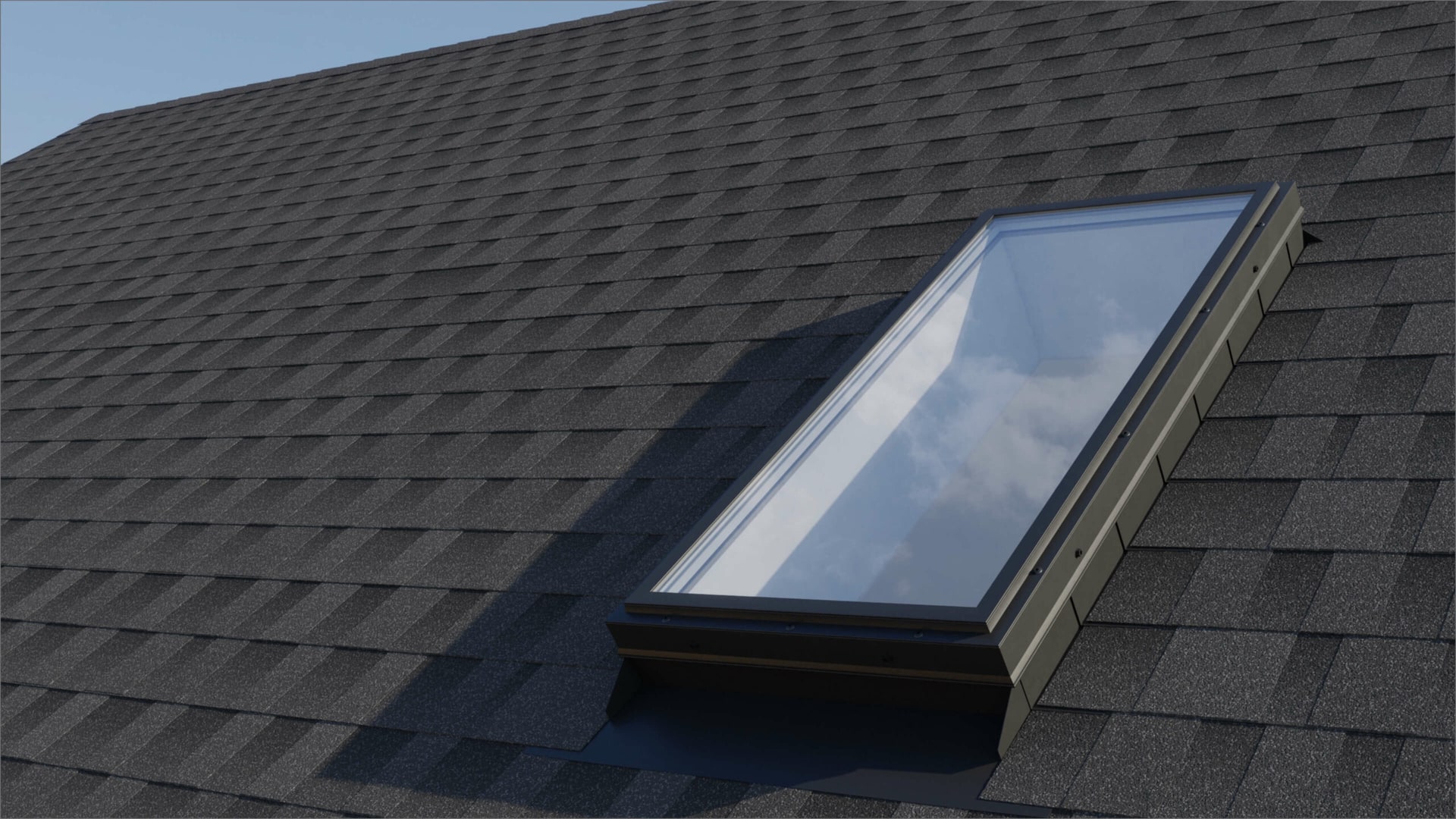
Stains that track back to a roof penetration almost always mean the flashing or boot around it has failed, not the thing itself.

Daylight in the attic, or wet insulation

Get a torch into the attic on a bright day. A pinhole of daylight, a dark patch on the underside of the plywood or matted insulation points straight at the problem.

Granules in the gutter, lifted laps outside

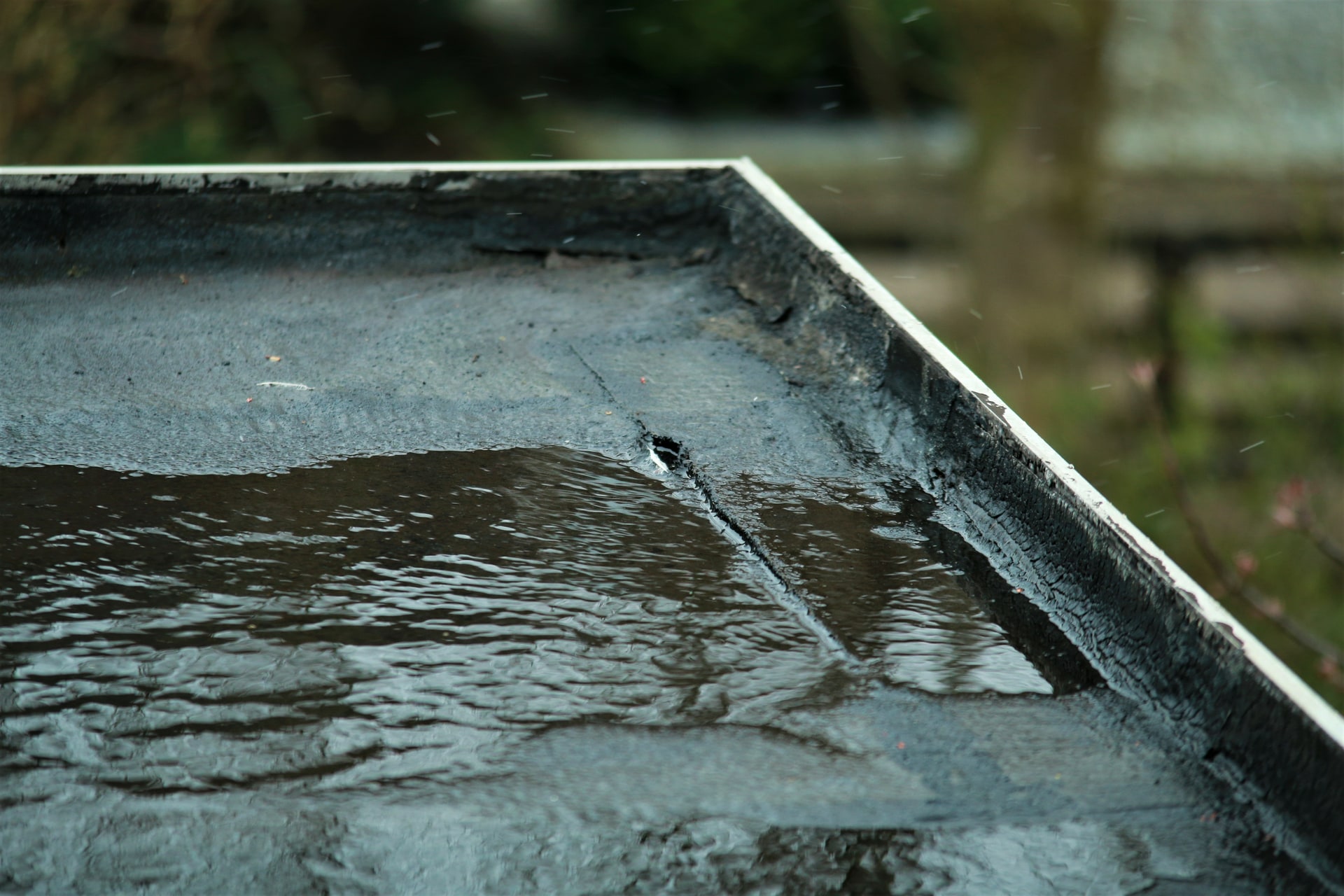
From the ground: shingles that look bald or lifted, a ridge cap sitting proud, a flat-roof lap with a shadow line under it, or sealant that has pulled away from a wall.

Ice at the eave in winter

A leak that only appears in January or February is usually an ice dam, which is a different fix. See ice dam repair.

The Okanagan is hard on details.

Kelowna gets more sun than most of Canada, and it gets it with big swings: hot roof decks in July, freeze-thaw for weeks at a time in winter, and wind off the lake that arrives sideways. None of that bothers a roof much in the field. It bothers the details.

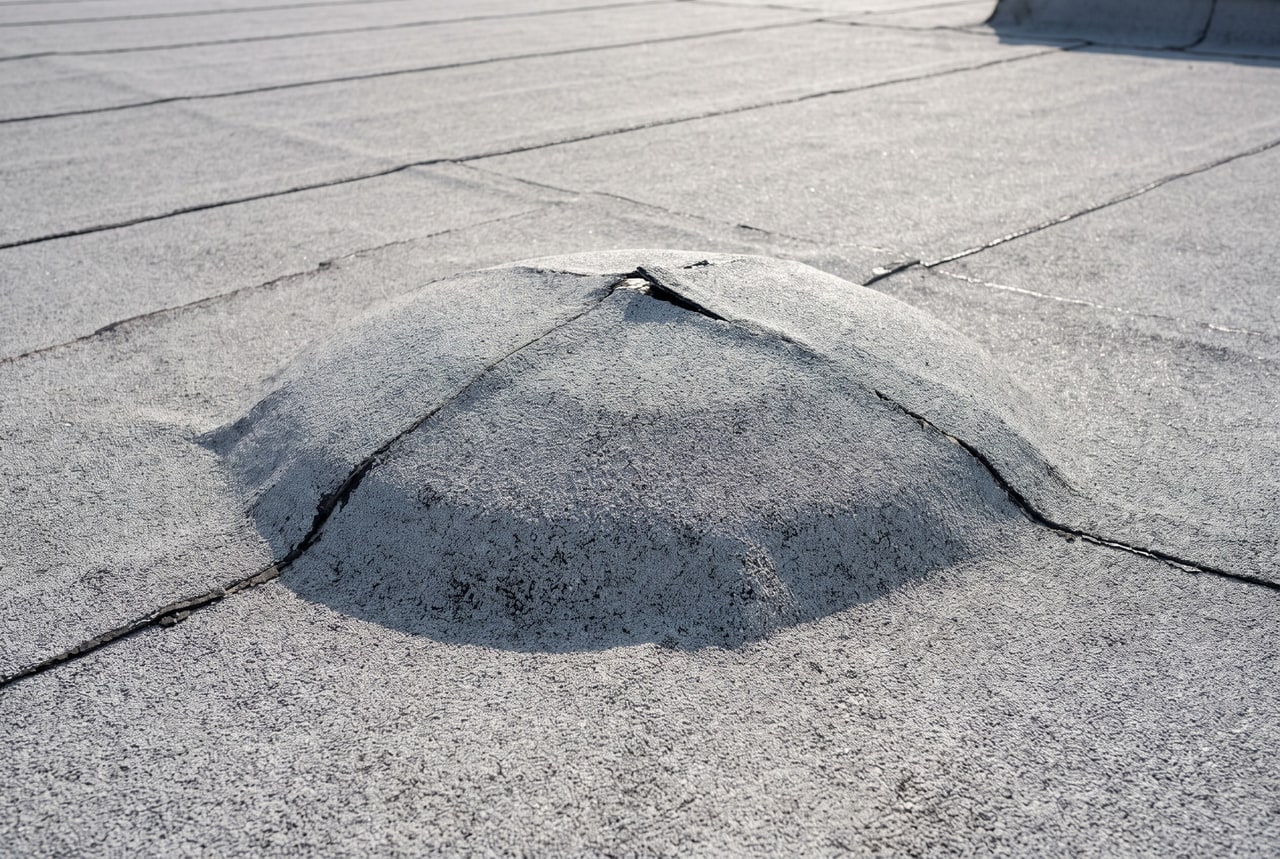
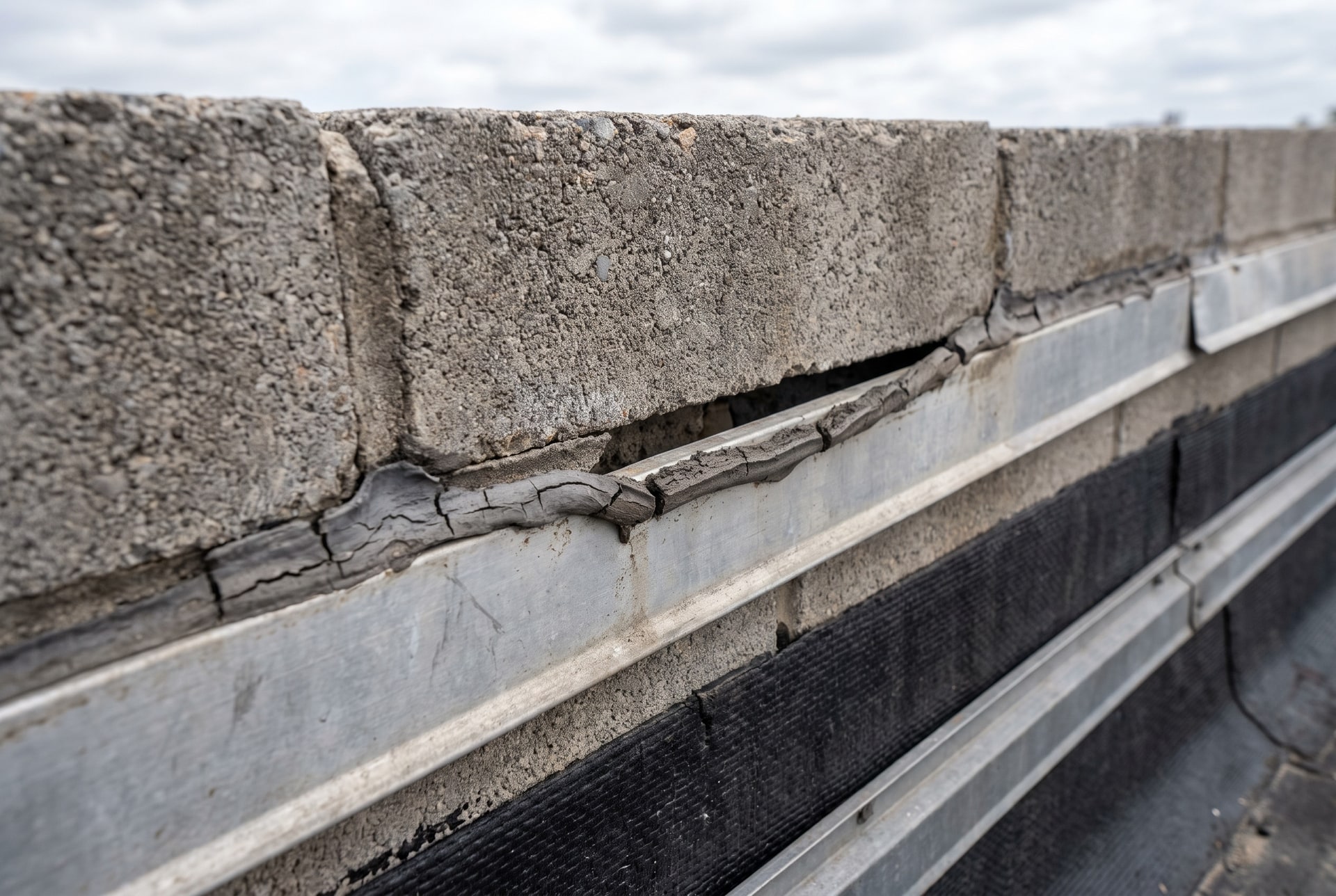
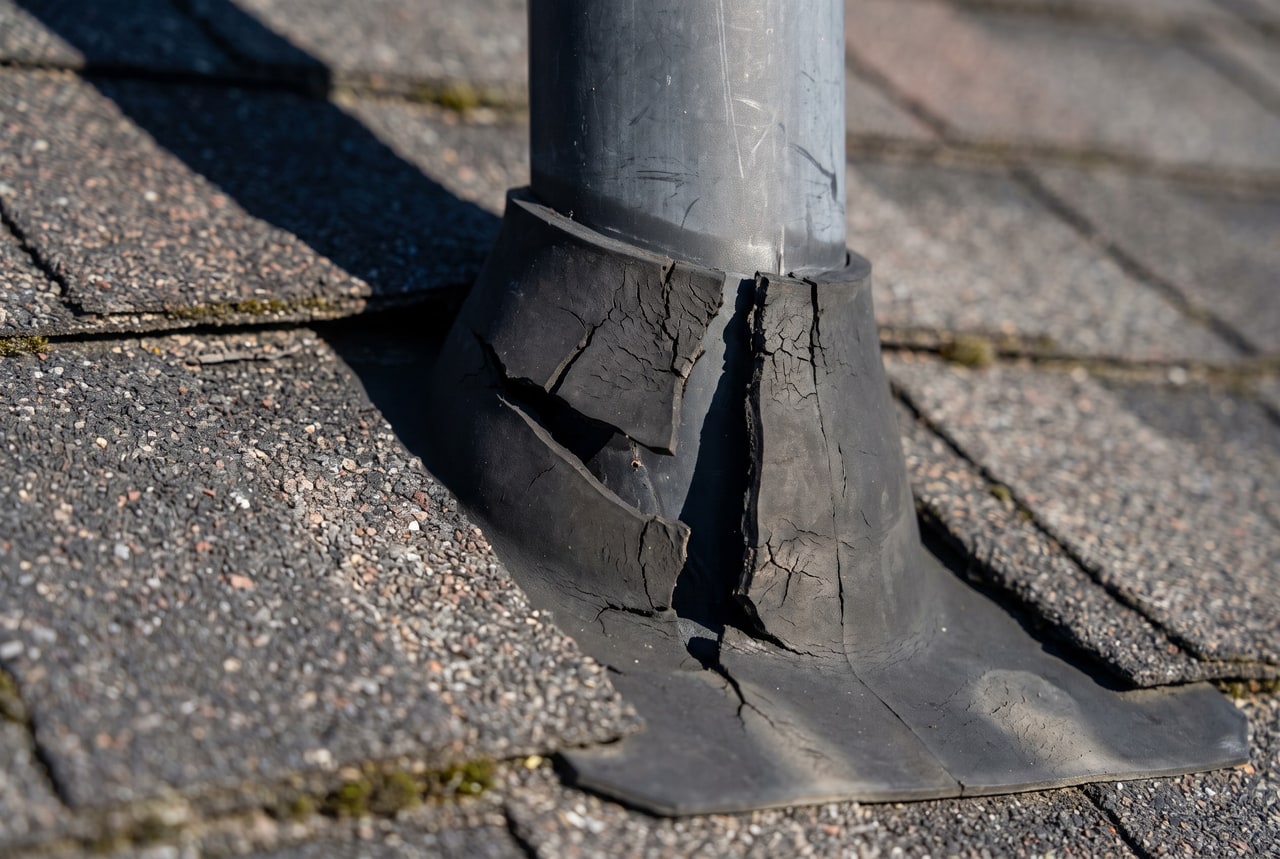
Sealant at reglets, counterflashing and pitch pans shrinks and cracks years before the roof around it wears out. Rubber pipe boots go brittle in UV and split around the stack. Laps on torch-on and SBS membranes open along the seam where the movement concentrates. Shingle seal strips that let go in one wind let the next one get under the course. And needles from the pines pack the drains and valleys, so the water that should have left the roof sits on it instead.

That is why the leak is rarely where the stain is. The entry point is a detail, and the stain is wherever the water found its first way through the ceiling.

A leak does not stay a leak.

A drip is the cheapest thing that will ever happen to this roof. Everything downstream of it is more expensive than the repair, and it goes in a predictable order.

First rains

Stain and drip

Water finds the first hole below the entry point, usually a light fitting or a drywall seam. The ceiling stains. Underlayment and the top of the deck get wet and dry out between rains.

Fix now: a repair visit

Weeks to months

Deck stays wet

The plywood or OSB under the entry point stops drying out fully. It swells, the fasteners around it loosen, and the stain inside spreads with every rain instead of fading.

Fix now: repair plus a drywall patch

A season

Insulation and mould

Attic insulation soaks it up and holds it. Wet insulation does not insulate, so the heating bill goes up, and the damp cellulose or batt grows mould that ends up in the air the house breathes.

Fix now: repair, insulation, remediation

A year or more

Rot and structure

Sheathing delaminates and goes soft. Nails lose their bite, so the next wind takes shingles that were fine. Rafter ends and top plates start to rot. Now the repair is a section of new deck and a structural look, not a detail.

Fix now: new deck, often a re-roof

We drew the whole sequence, stage by stage, with the roof section changing as you scroll.

The cost of waiting

Trace it. Stop it. Fix the detail.

Chasing the stain is how a roof gets patched five times and still leaks. The sequence below is how it gets patched once.

Step 01

Inside first, then up

We start where the water is showing and work backwards: the stain, the attic above it if there is access, the underside of the deck, then the roof directly uphill of the wet spot. Water runs downhill along rafters and sheathing, so the entry point is usually above and often to one side of where it drips.

Step 02

Check the details, not the field

Every penetration, flashing, lap and termination uphill of the stain gets looked at: pipe boots, vents, skylight and chimney flashings, valleys, wall and step flashings, sealant joints, membrane seams and edge metal. If nothing obvious shows, a controlled water test isolates the section that is letting water through.

Step 03

Stop the water if it is active

If it is raining into the house, the first job is a temporary measure that holds: a peel-and-stick patch on a membrane, a properly secured tarp over a shingle section, a cleared drain. Sealant smeared over a wet detail is not a repair and we do not sell it as one.

Step 04

Repair with matching material

A split boot gets a new boot. Failed counterflashing gets refitted or replaced, with the reglet resealed. An open lap on torch-on gets cut back to sound membrane and re-torched with a matching cap sheet. Lifted shingles get resecured or replaced with the surrounding courses checked. The wrong sealant or the wrong membrane on a patch fails faster than what it replaced, so we match what is up there.

Step 05

Tell you what else we saw

While we are up there we look at the rest of the roof and write down what is coming: the next sealant joint to go, the moss taking hold on the north slope, the drain that will be full by November. With photographs. So the next repair is planned rather than another emergency.

Repair, or replace?

Most leaks come from one failed detail on a roof that otherwise has life left. Those are repairs, and good ones last as long as the roof around them.

If the membrane is brittle and splitting in the field, shingles are bald across whole slopes, insulation is saturated or the deck is soft underfoot, a repair is money spent twice. We will tell you that on the first visit rather than after the third patch. Replacements are done by Premium Roofing, same crews and same phone number. How we decide.

What a leak repair costs

We do not quote a roof we have not seen. What moves the number is not the size of the hole but what failed, how far the water travelled, whether the deck under it is still sound, and how hard the spot is to reach safely.

What you can count on: the inspection and written quote are free, pricing is flat-rate, and anything that could change the number is named before work starts, not on the invoice. If it turns out to be smaller than expected, the price comes down. It has before.

Leak repair questions.

We find it. Knowing where the water shows up inside is useful, but it is a starting point rather than the answer. Water travels along the deck, rafters and ceiling before it drips, so the entry point is usually somewhere else on the roof.
Emergency calls are answered 8 am to 5 pm on weekdays, and weekends by arrangement for a fee. If water is actively coming into the building, say so when you call and the visit is prioritised. An active leak usually gets a temporary measure first, with the permanent repair once the roof is dry enough to do it properly.
Most leaks come from one failed detail on a roof that otherwise has life left, and those are repairable. If the membrane or shingles are failing across the field, the insulation is saturated or the deck is soft, a repair is money spent twice and we will say so. See repair vs replace.
It depends on what failed, how far the water travelled and how hard the spot is to reach, which is why we do not quote sight-unseen. The inspection and written quote are free, pricing is flat-rate, and anything that could move the number is named before work starts.
Sometimes it is condensation, especially in cold snaps, around skylights, bathroom fans and poorly ventilated attics. It looks identical from inside and is fixed completely differently. Part of the diagnosis is ruling this out before anything on the roof is touched.
Move anything valuable out from under the drip and put a bucket down. If the ceiling is bulging, a small hole through the lowest point of the bulge with a screwdriver lets the water out in a controlled way instead of the drywall letting go all at once. Do not go on the roof in the rain. Take a photo of the stain and note when it drips and what the weather was doing, which helps us find it faster.

Where leaks usually start.

Something up there isn't right?

Tell us what you are seeing and we will come and find out what is causing it. Estimates are free, written down, and honest about whether the roof is worth repairing.

250-258-8600

Free estimates • Kelowna, West Kelowna, Lake Country & Peachland